How to Draw Anime Hair
From basic flow lines to complex multi-layered styles. Learn how anime hair is structured, how to draw its flow and volume, and how to shade it.
Introduction
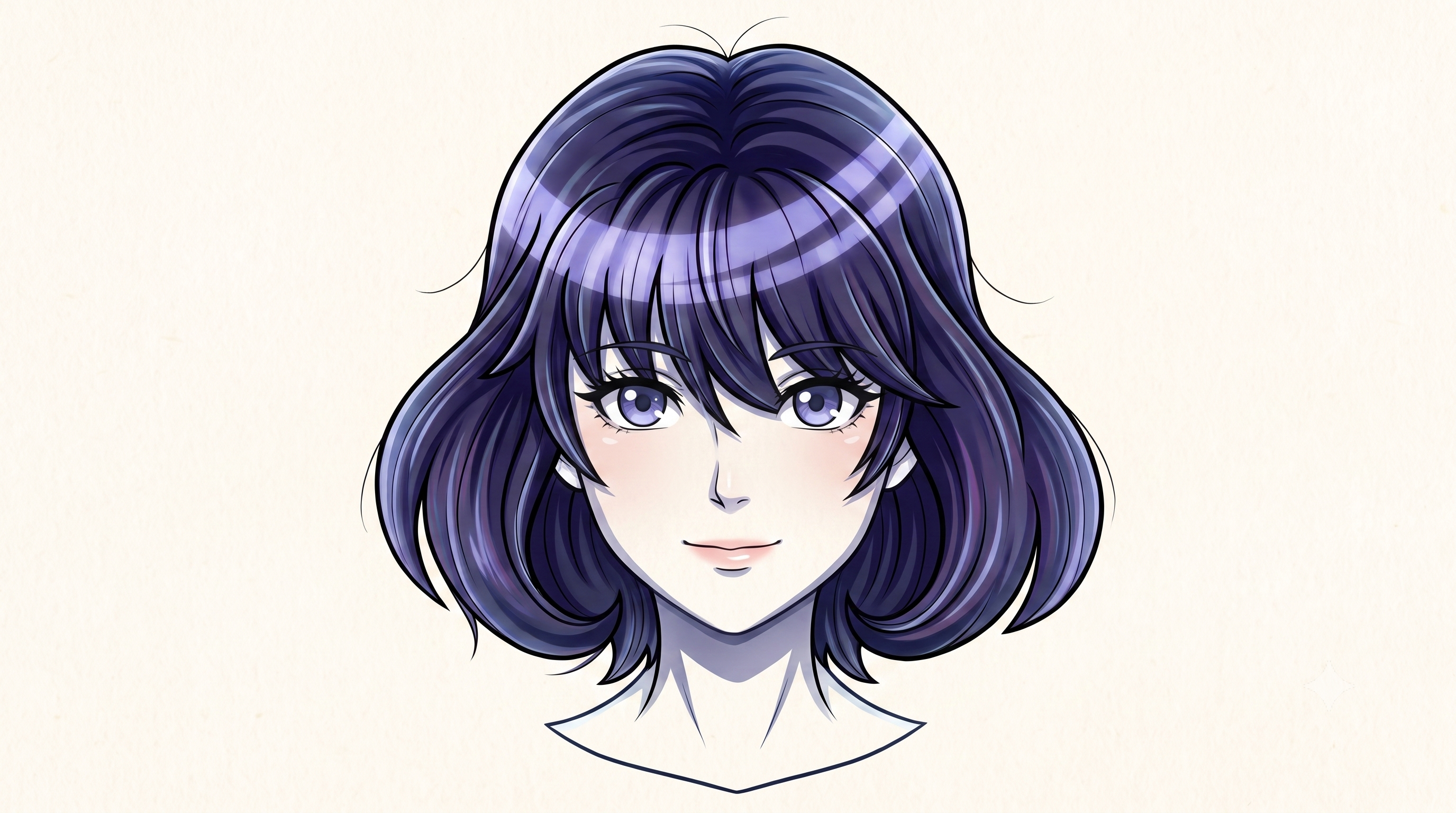
Anime hair has its own visual logic — it follows gravity, moves as one cohesive mass, and catches light in distinctive highlight streaks. This tutorial breaks down the system.
What You’ll Learn
- How to think of hair in sections/chunks
- Drawing the hairline and part
- Flow lines for different hair lengths
- Long, medium, and short hair techniques
- Adding volume and depth
- The signature anime hair highlight streak
- How hair style signals character personality
- Drawing ponytails, buns, and tied-back styles
Step 1: Establish the Hairline
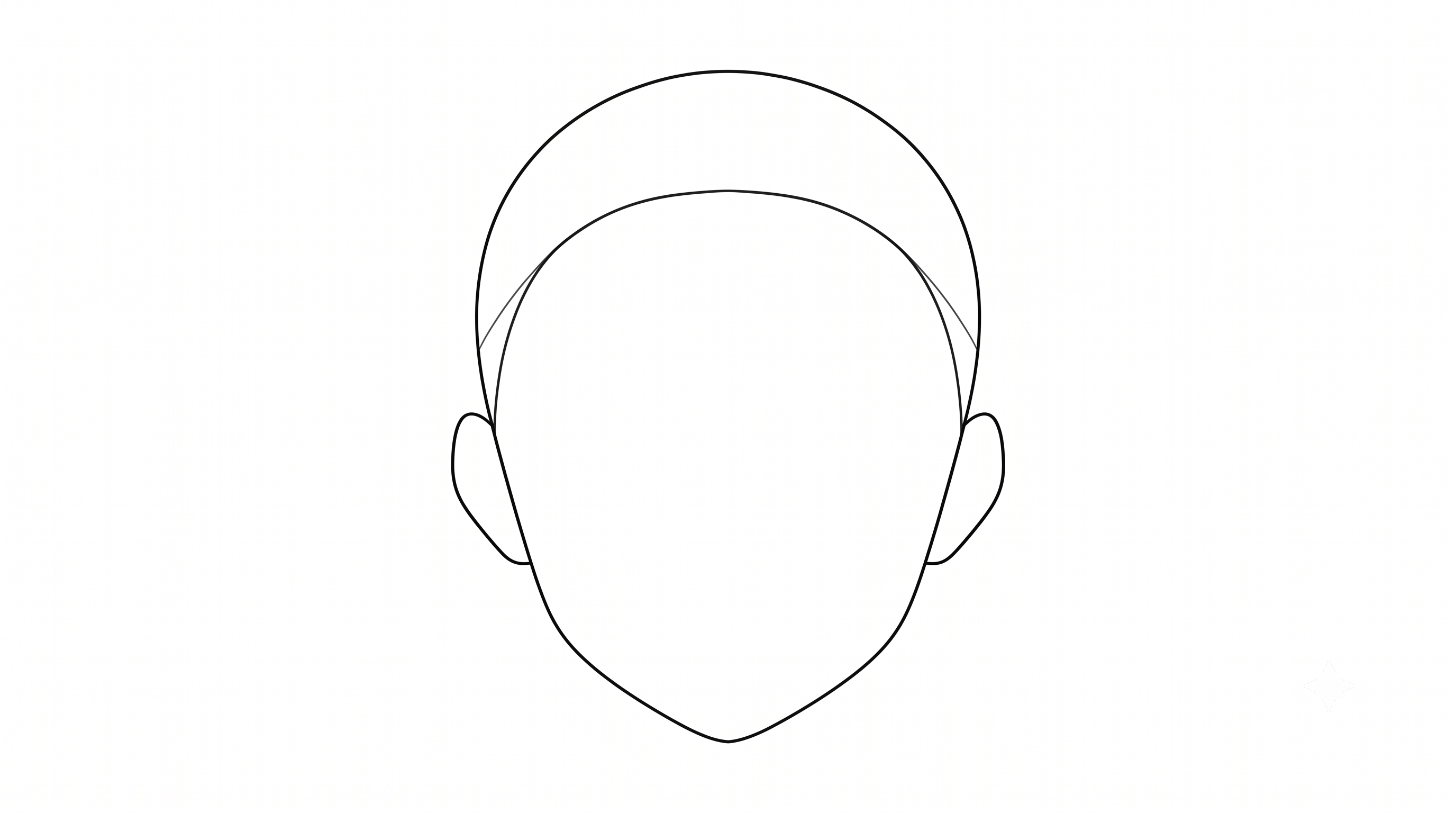
Draw the hairline on the forehead. It starts at the sides of the head, roughly at the top of the ears, and curves across the top. Leave about 1/5 of the forehead exposed.
Step 2: The Part
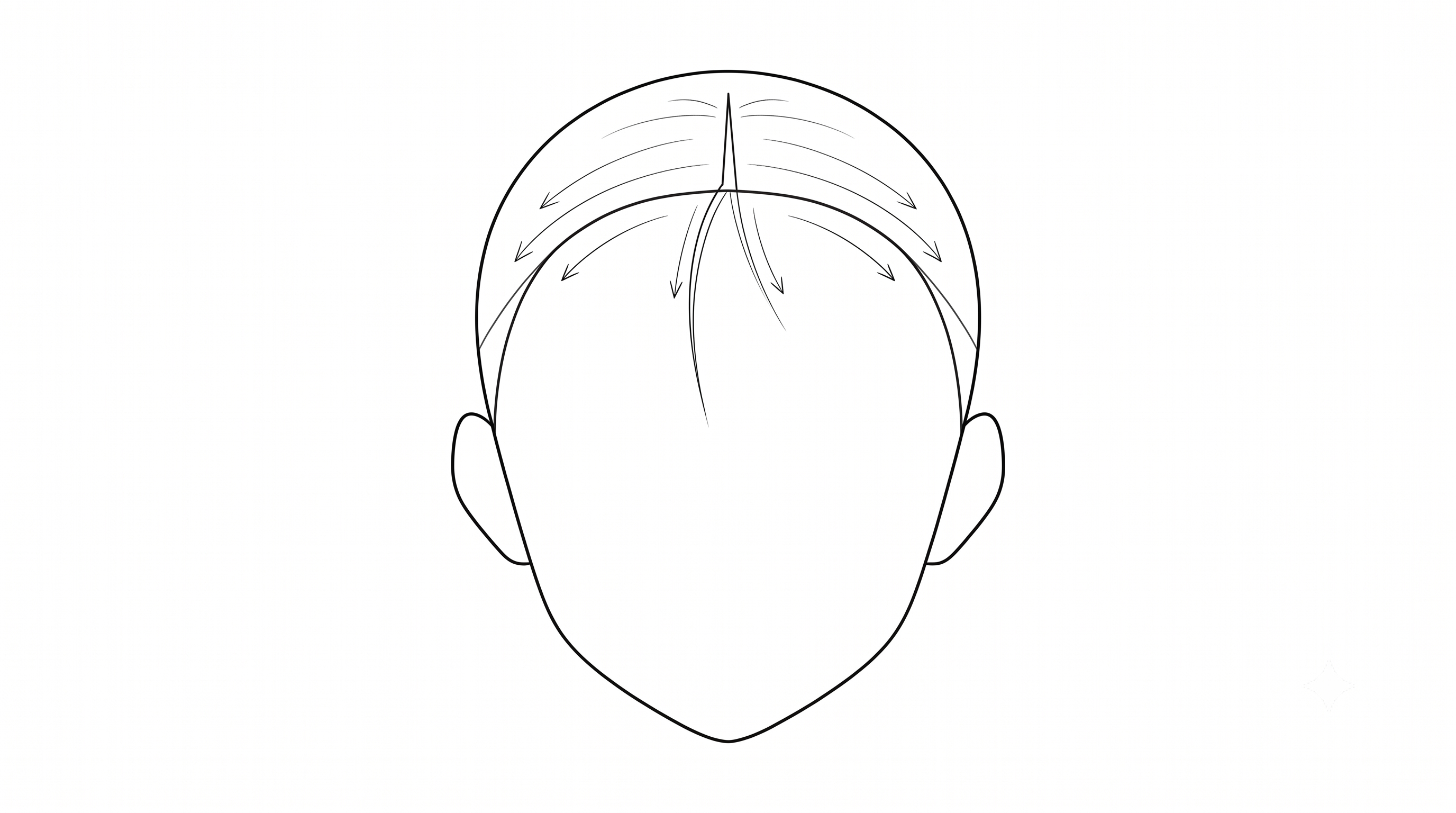
Decide where the part is. Draw a clean line from the hairline at the part. All hair flows away from this point.
Step 3: Think in Chunks
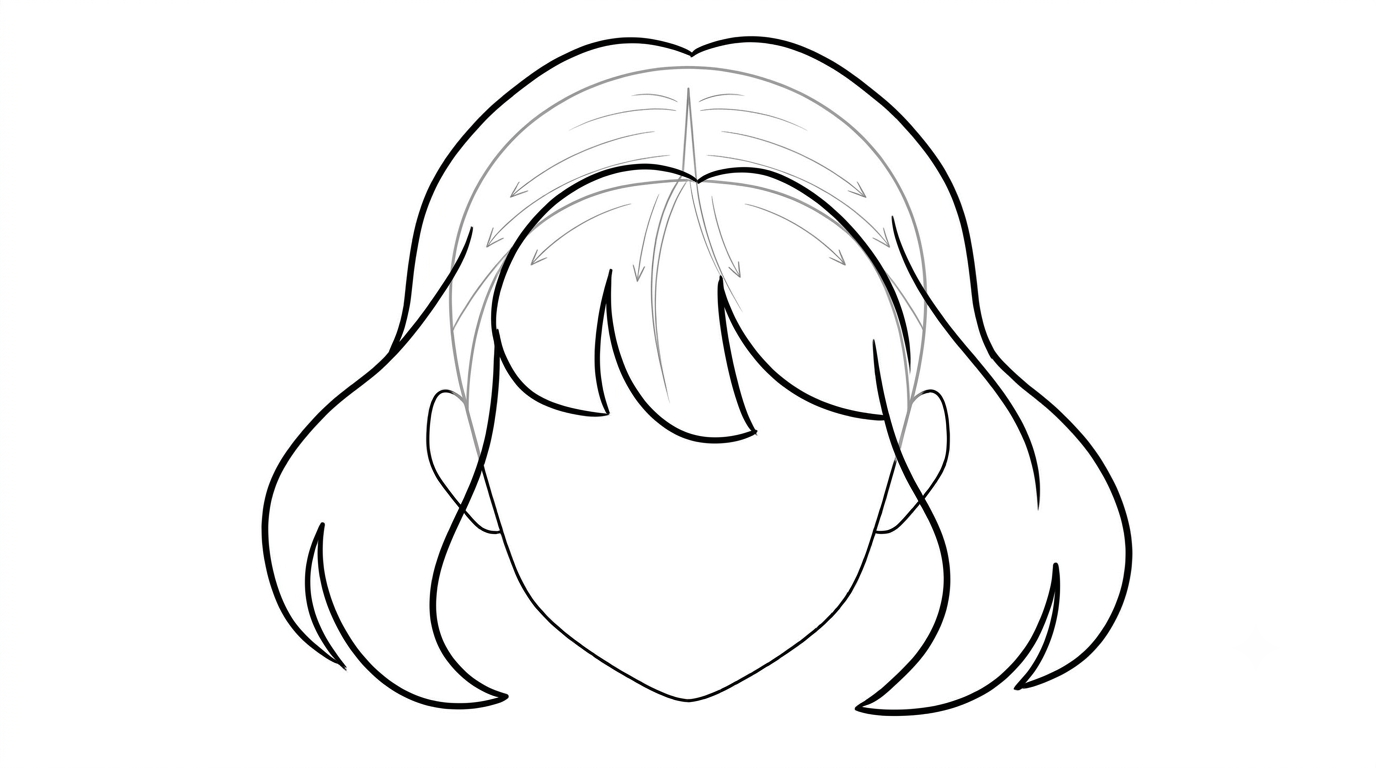
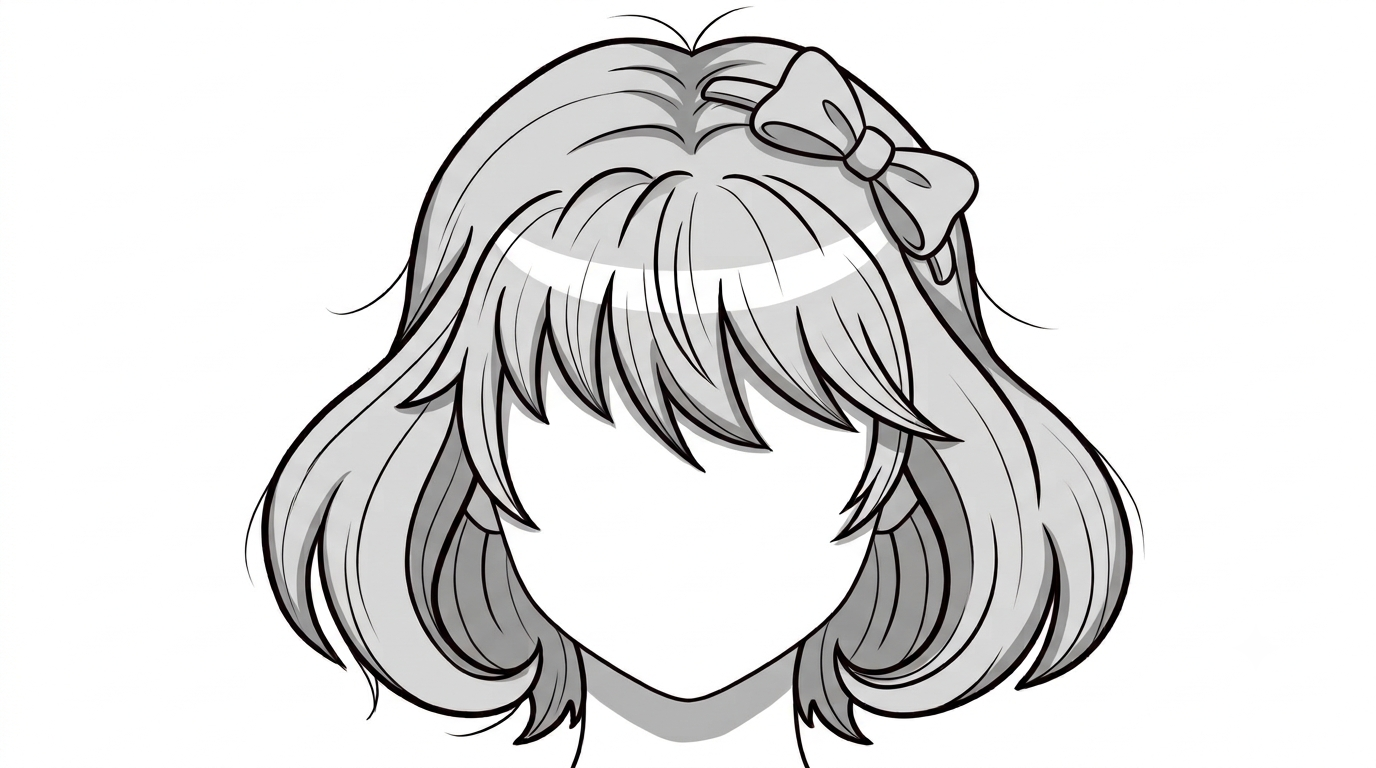
Don’t draw individual strands. Think of hair as 3-5 large chunks/sections that flow together. Draw the outer silhouette of each chunk first.
Step 4: Fringe/Bangs
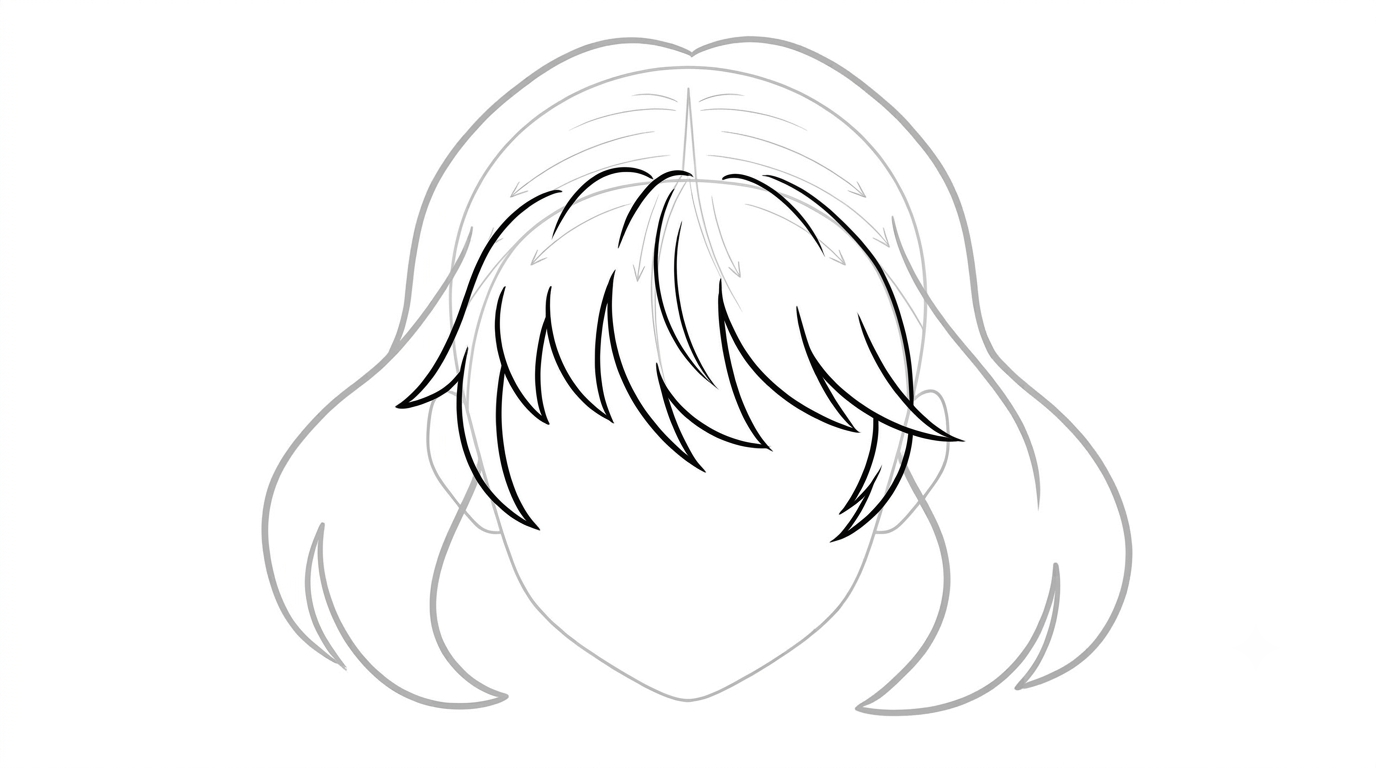
Bangs fall from the part and drape over the forehead. Draw them as triangular spikes or curved masses. The tips of each spike should point in the direction of flow.
Step 5: Side Hair
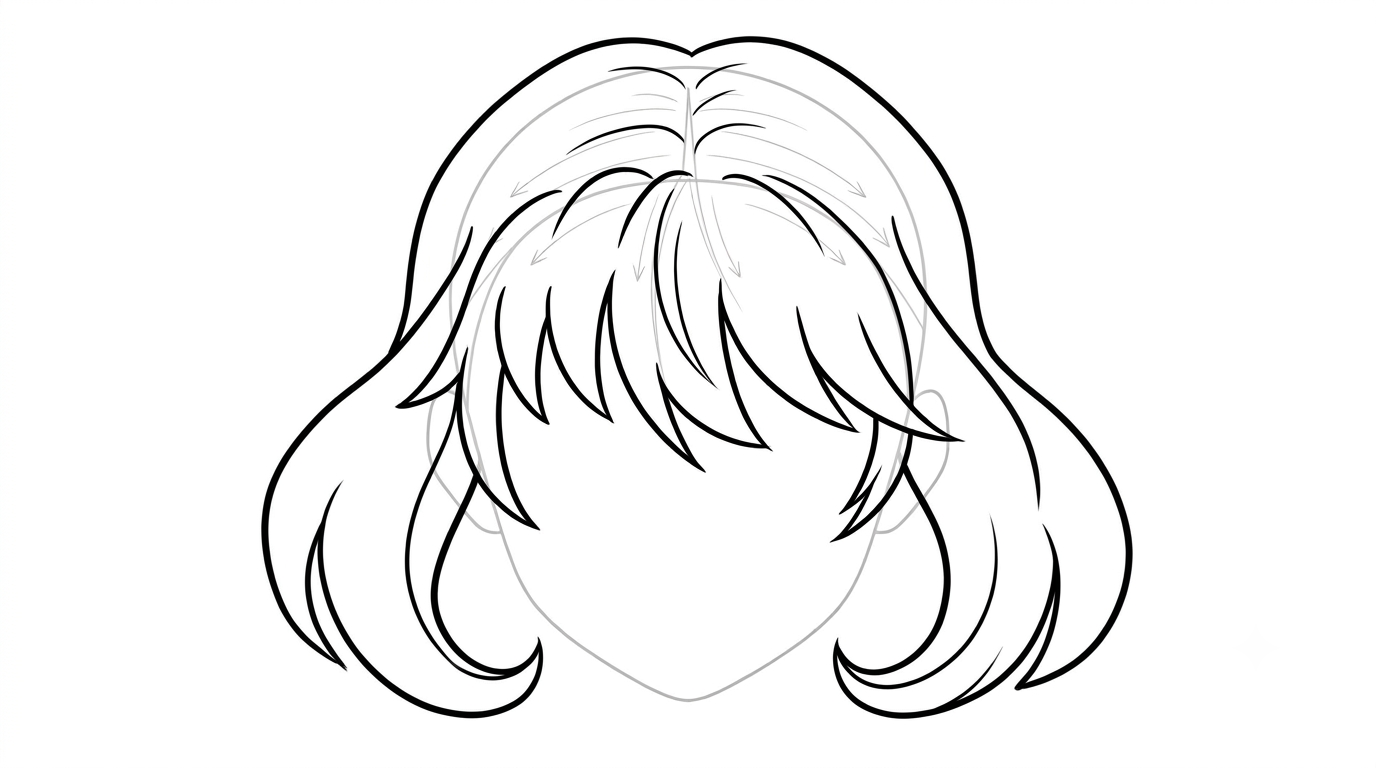
Side hair frames the face. For long hair, it falls straight down or curves around the jaw. Draw it as one smooth flowing mass with slight curves at the ends.
Step 6: Back Hair
For long hair, the back mass is the largest chunk. It flows down and slightly flares at the ends. Keep the silhouette interesting — irregular tips add realism.
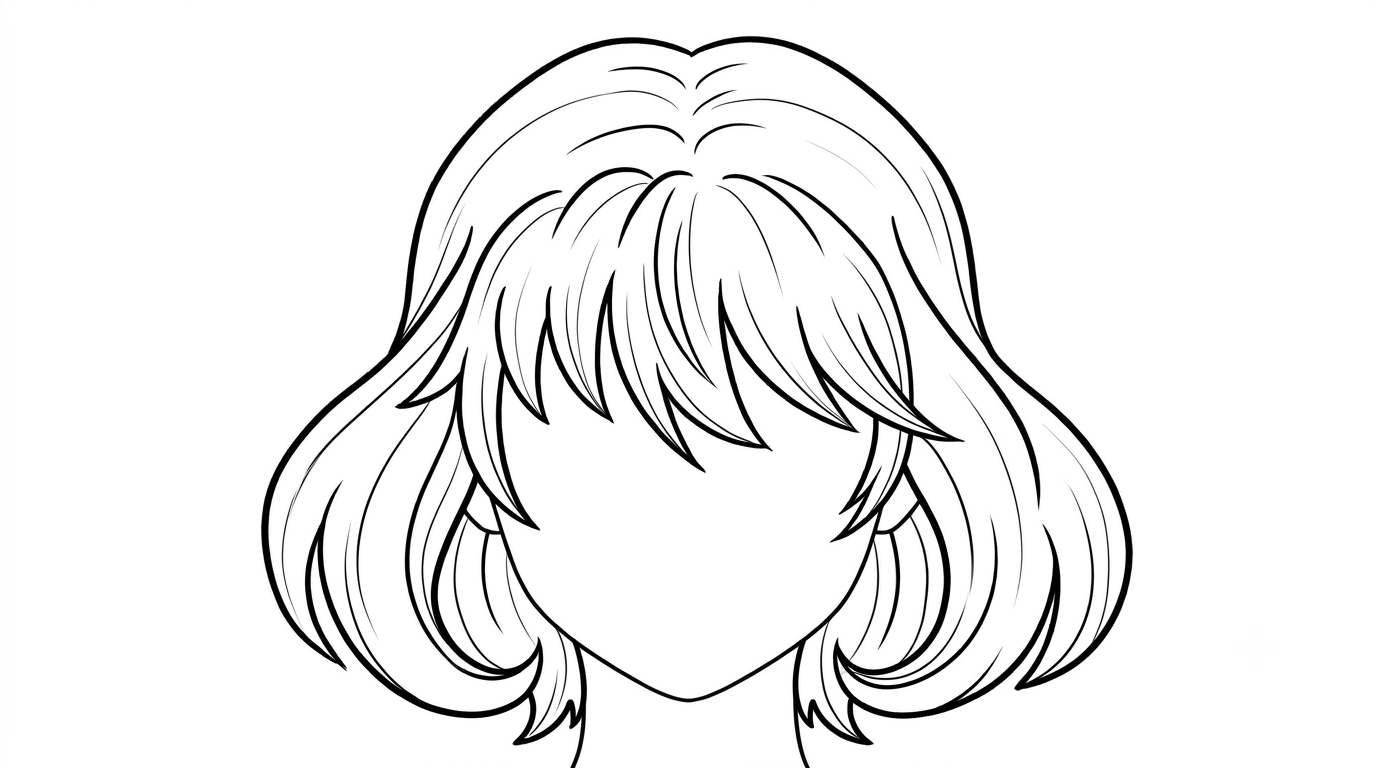
Step 7: Inner Lines
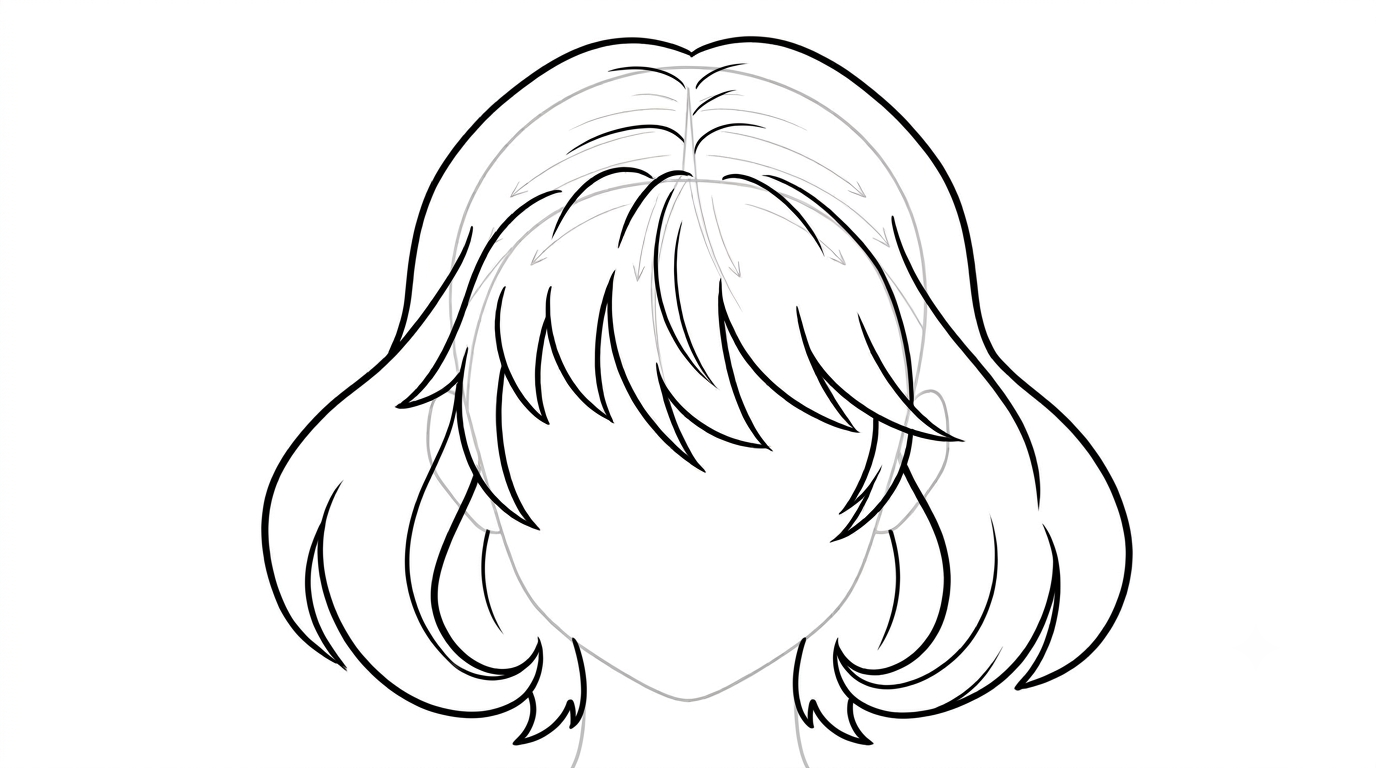
Add 2-3 lines inside each chunk to suggest individual strands. These should flow parallel to the outer edge of the chunk.
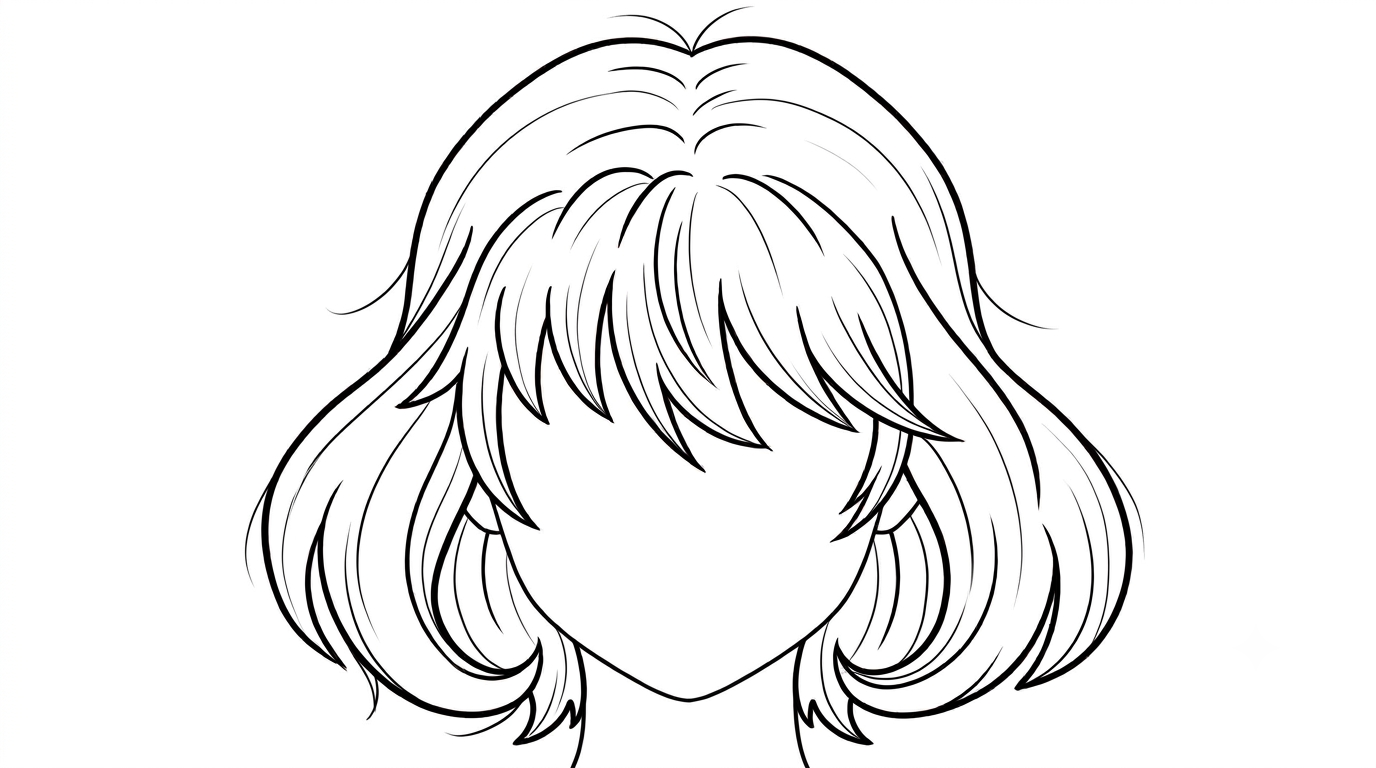
Step 8: Flyaways
A few random stray hairs at the silhouette edge add life. Keep them sparse — 2-3 total.
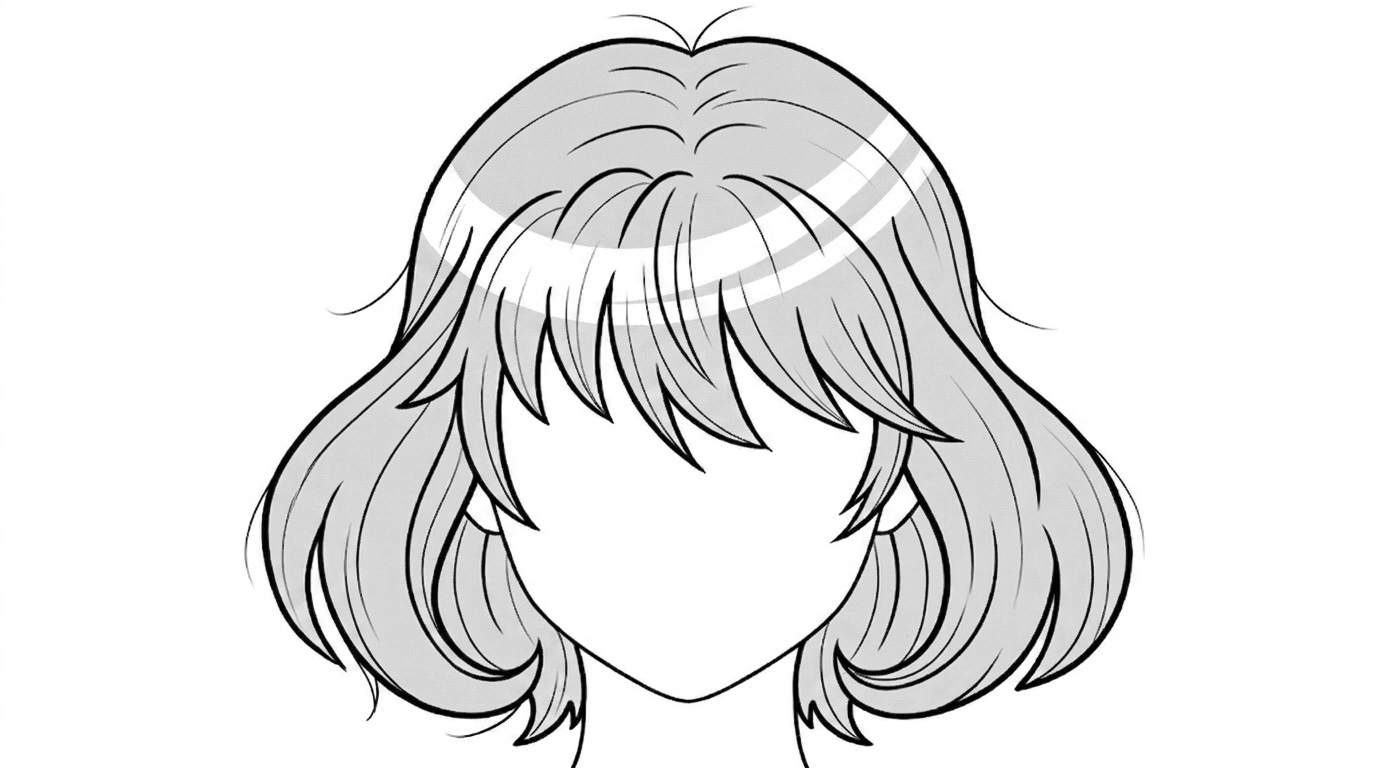
Step 9: Highlight Placement
The main highlight streak runs across the top of the hair, perpendicular to the flow. It’s usually 2-3 thick diagonal lines.
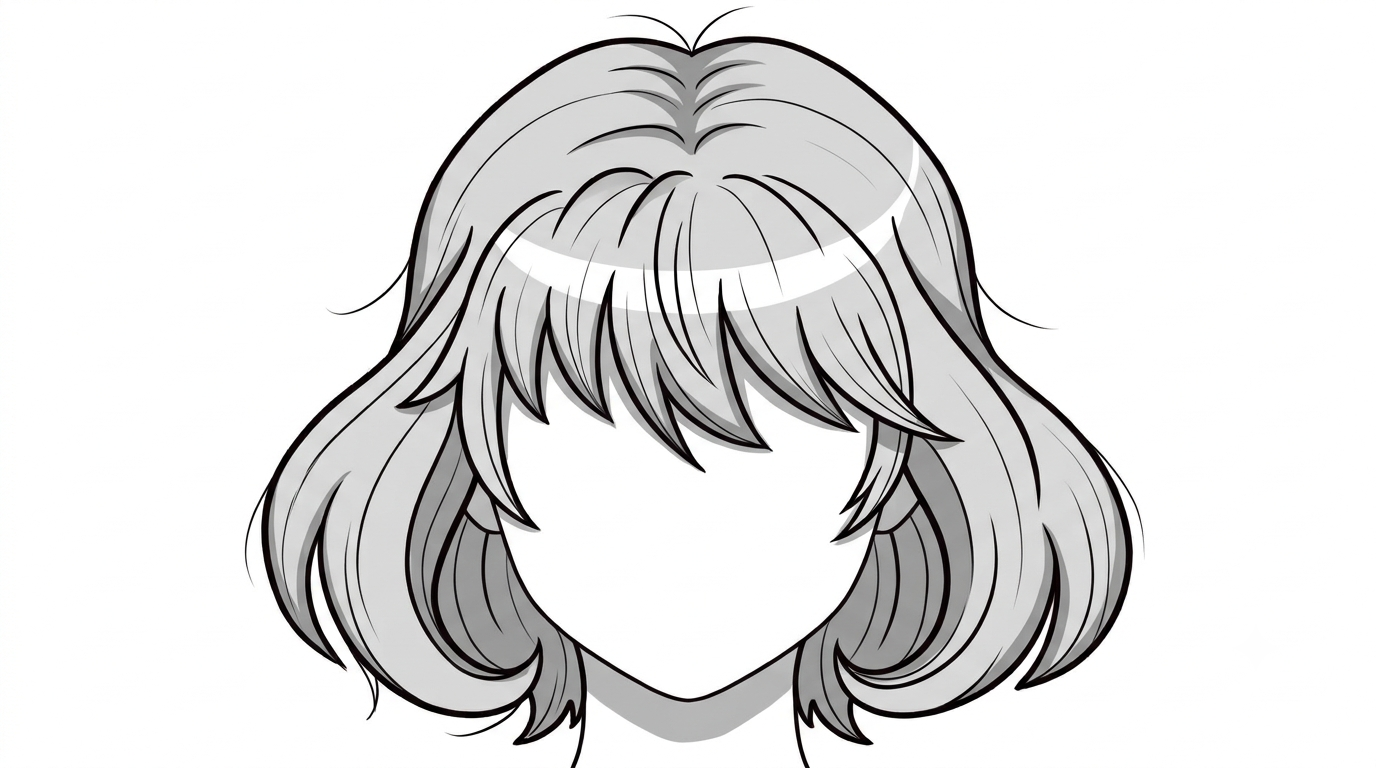
Step 10: Shadow Areas
Shadow falls at the bottom of chunks and where they overlap. Add soft shading at the base of the bangs and under the top layer.
Step 11: Hair Accessories
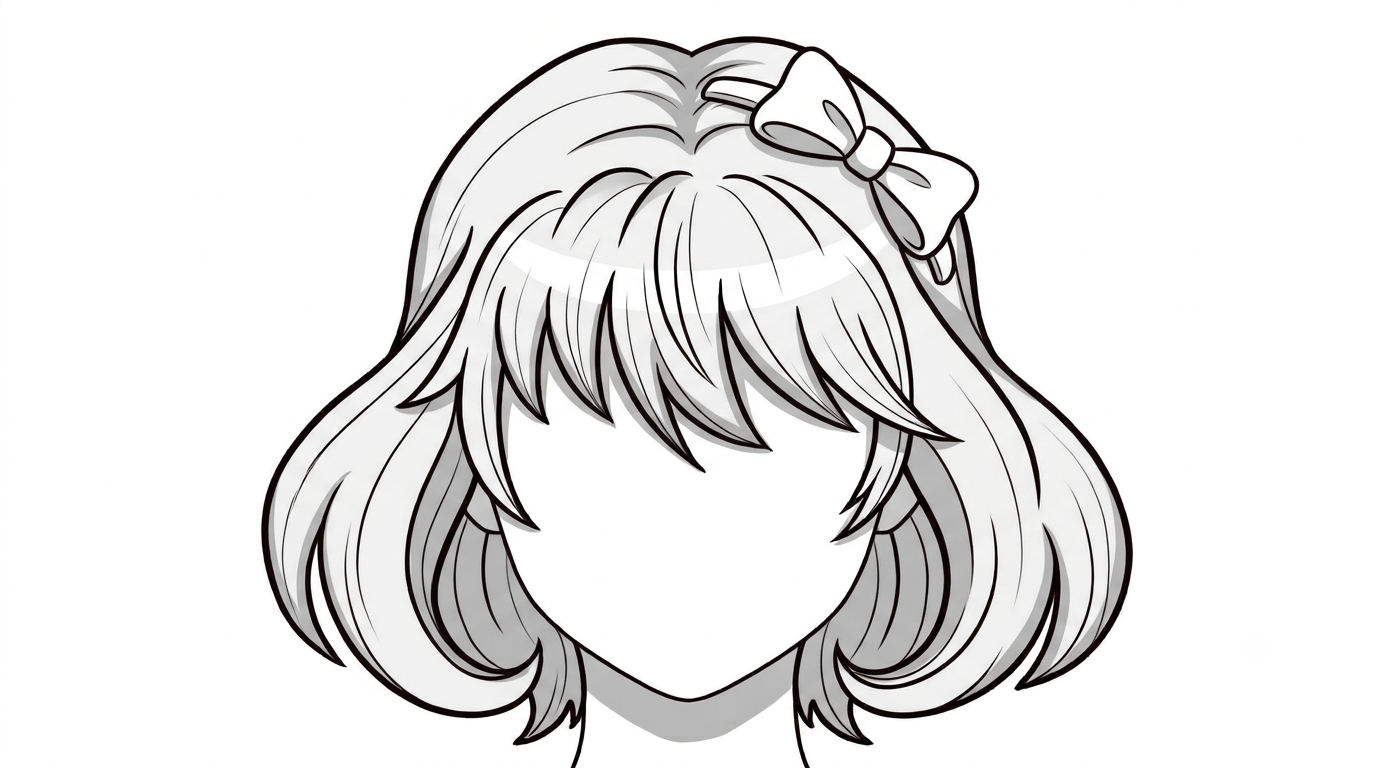
If adding accessories (ribbons, clips, hairbands), draw them on top of the hair mass — they sit on the surface, not inside.
Step 12: Final Cleanup
Refine the silhouette, clean up inner lines, and make sure highlights are clean white.
Step 13: Hair Style and Personality
Hair style is one of the strongest visual signals of character personality in anime. Long, flowing hair signals grace, elegance, or mystery. Short, spiky hair signals energy, rebellion, or action. A neat ponytail signals discipline or maturity. Messy, untamed hair signals a free spirit or chaotic energy.
When designing a character, choose the hair style first and let it guide the silhouette. The hair silhouette is often more recognisable than the face itself — think of Goku’s spiky hair or Sailor Moon’s long odango. A strong hair silhouette makes your character instantly readable even in a small panel.
Step 14: Drawing Ponytails, Buns, and Tied Styles
Tied-back hair adds variety to your character designs. A ponytail is drawn by first drawing the hair mass as normal, then adding a small tight bunch at the tie point and a flowing tail section. The tail follows the same chunk logic as free hair: draw the outer silhouette, add inner lines, and place highlights.
A bun is a round mass sitting above or behind the head. Draw it as a single circle or oval shape first, then add a few stray strands to suggest it is made of hair. The bun’s position relative to the head — high, low, side, back — changes the character’s posture and personality reading.
Tip: The tie point is always slightly above where the hair naturally falls. Gravity still applies to tied hair; the tail hangs down from the tie, not from the scalp.
Common Mistakes
- Too many individual strands — draw chunks first, details last
- No highlights — highlights are essential for anime hair
- Stiff, rigid ends — let the ends taper and curve naturally
- Hair ignoring gravity — unless styled otherwise, hair falls down
Practice Advice
Study 10 different anime characters’ hair before drawing. Note how the artist breaks it into chunks.