How to Draw Anime Facial Expressions
Master 11 core expressions and microexpressions. Learn exactly how happy, sad, angry, surprised, embarrassed, determined, sleepy, and more change every single facial feature. Includes layering techniques and close-up cues.
Introduction
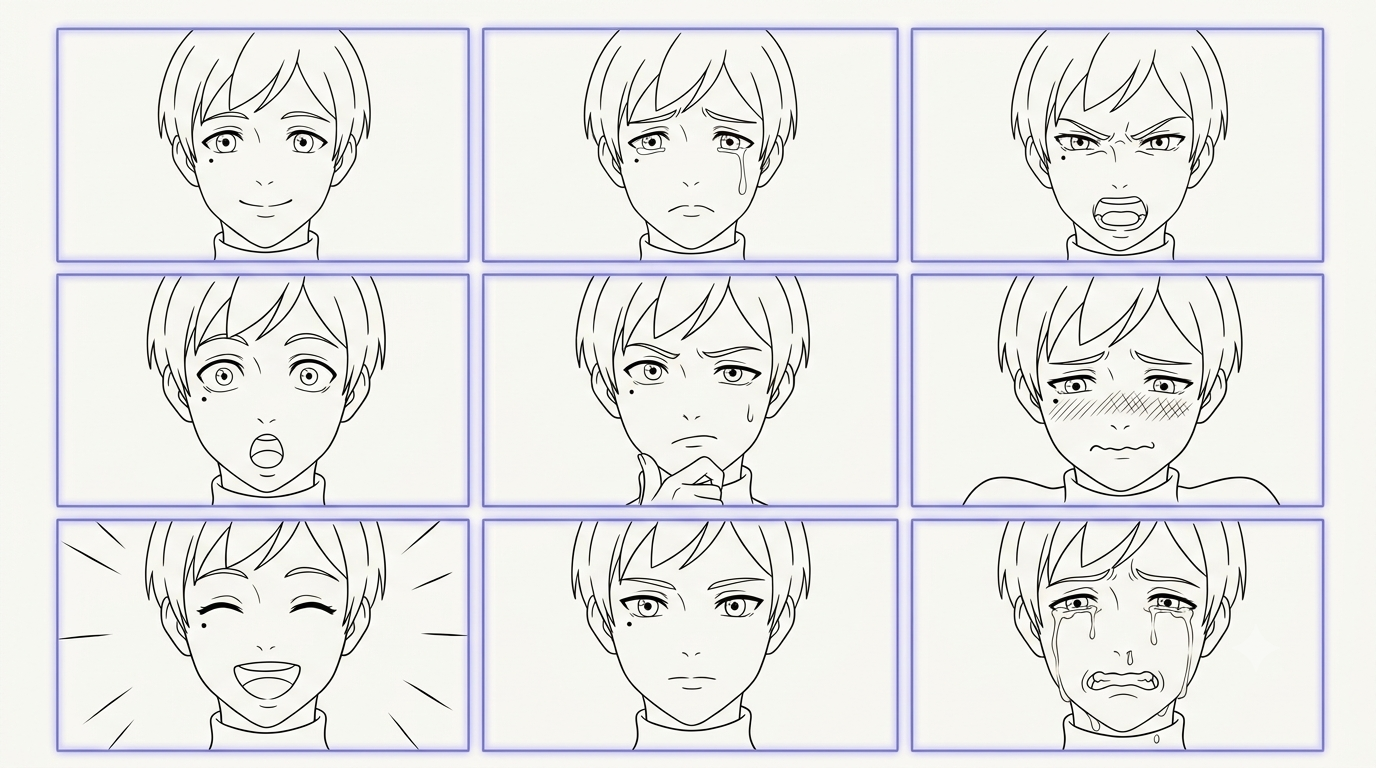
Expressions are what make a character feel alive. Every emotion changes the eyes, eyebrows, nose, and mouth in consistent ways. Once you understand the pattern, you can draw any emotion from memory.
The Expression System
Every expression is controlled by three things:
- Eyebrow angle and position — the most powerful signal
- Eye shape and openness — conveys intensity
- Mouth shape — confirms the emotion
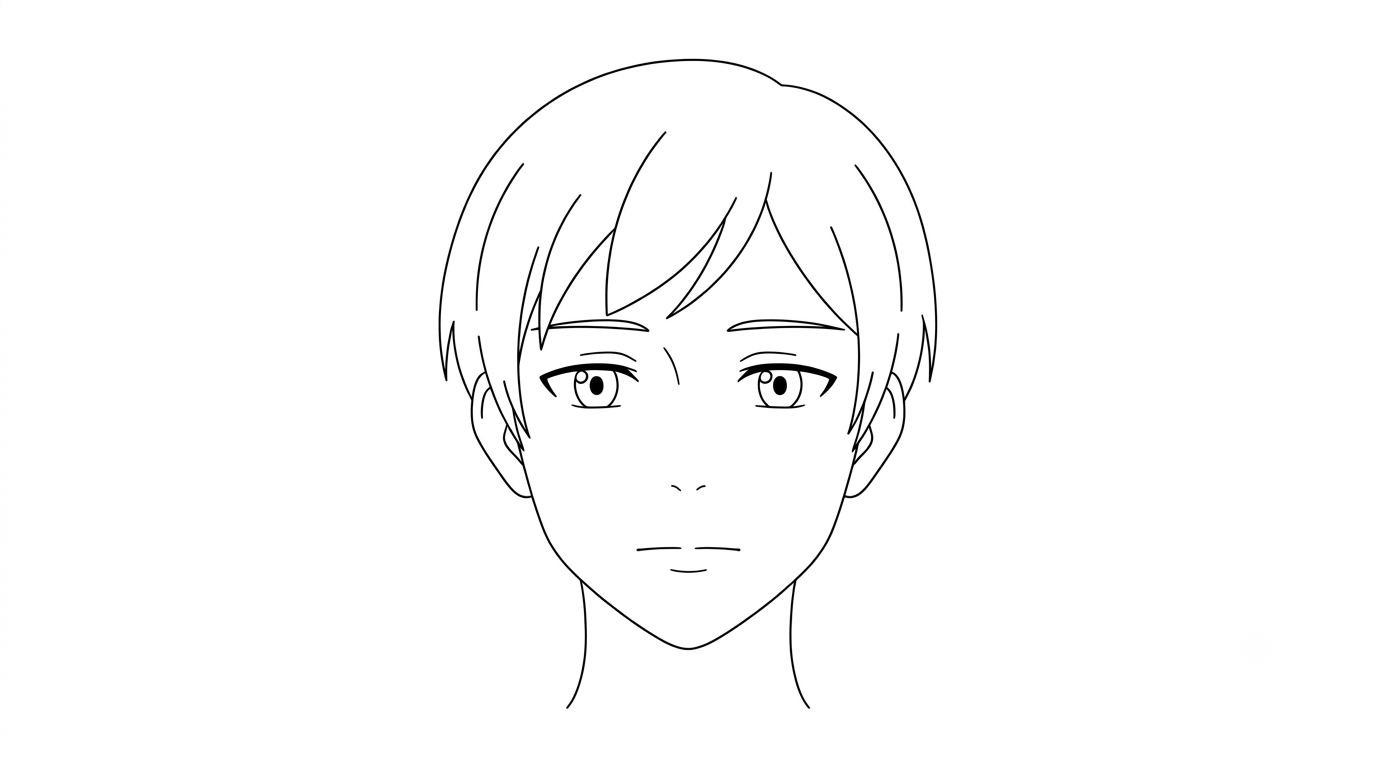
Expression 1: Neutral
- Eyebrows: flat, relaxed
- Eyes: standard, neither wide nor squinted
- Mouth: closed, slight upward curve or flat
Expression 2: Happy
- Eyebrows: slightly raised, curved upward
- Eyes: arched/crescent shape (squinting from smile)
- Mouth: wide smile, visible teeth or curved line
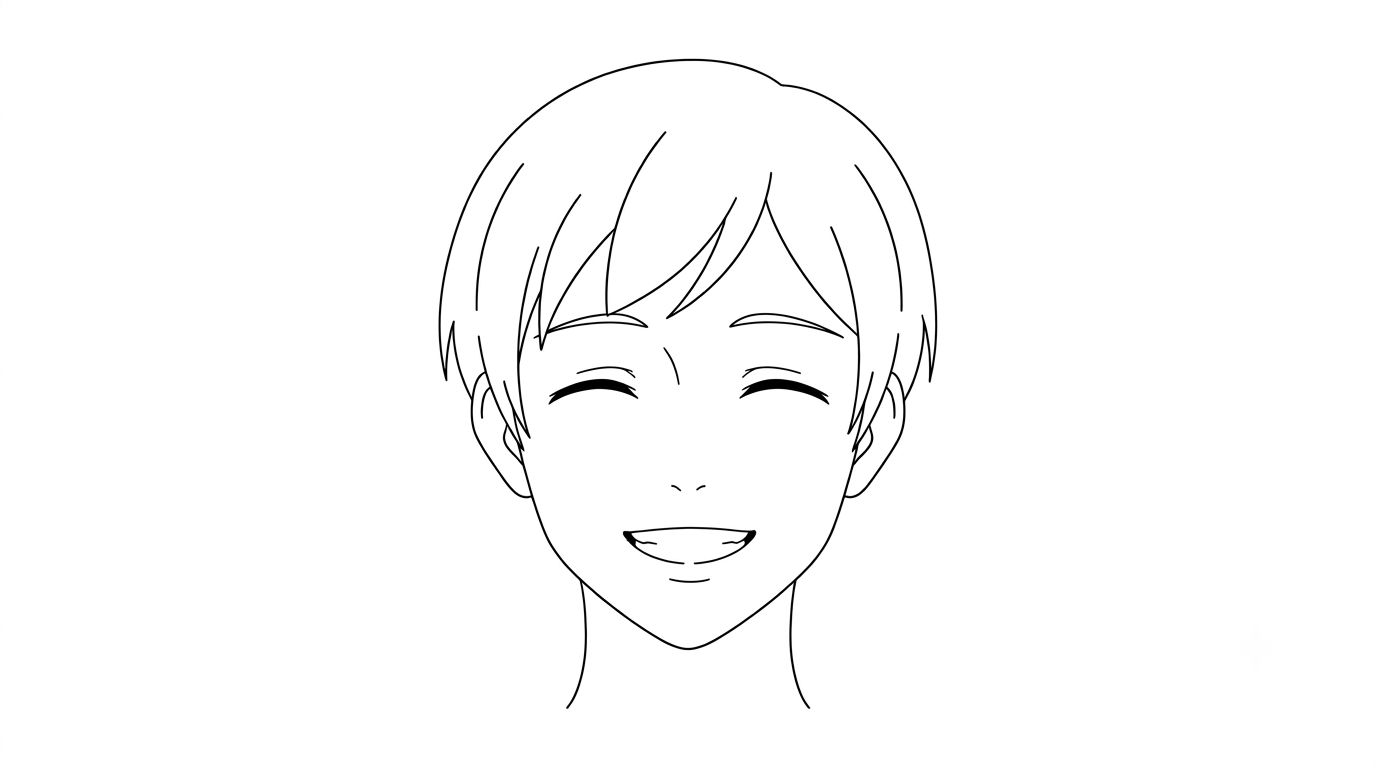
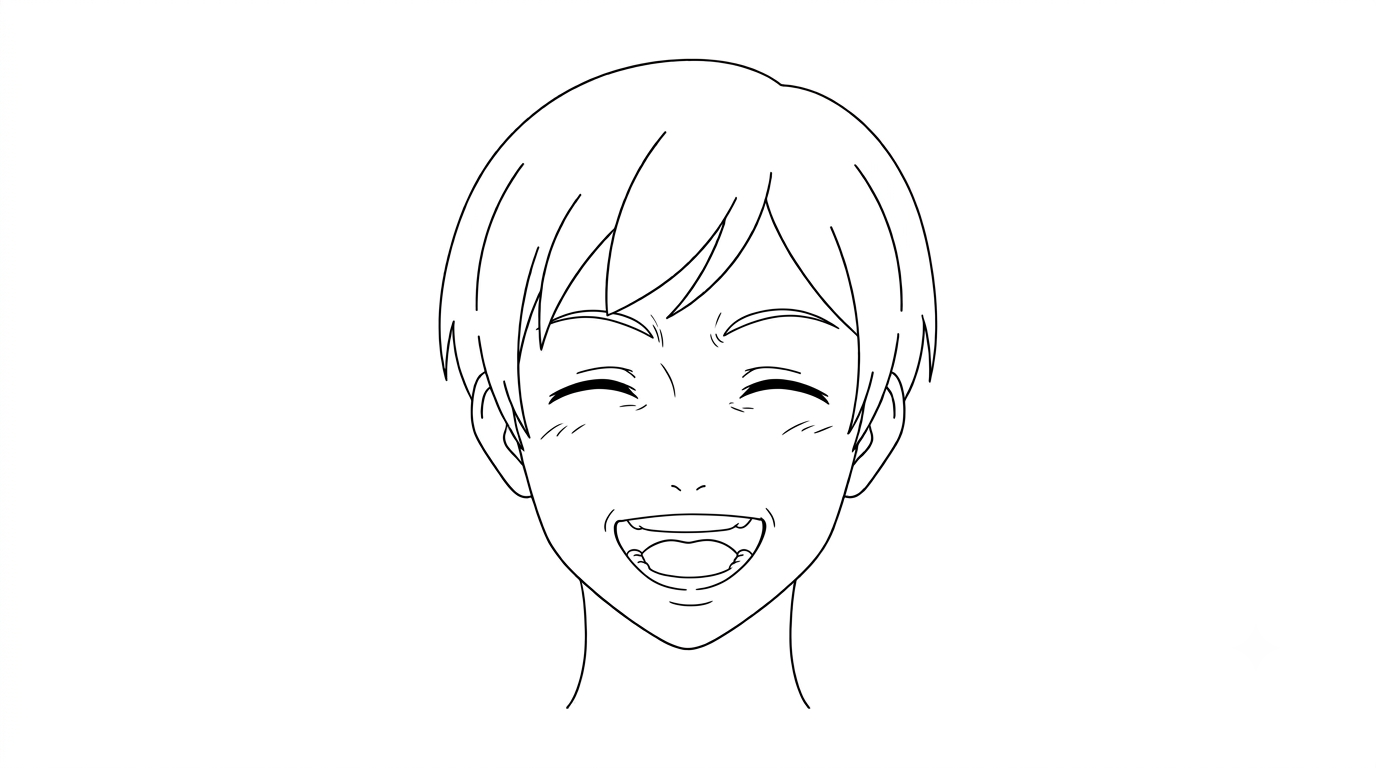
Expression 3: Laughing
- Eyebrows: raised, loose
- Eyes: closed crescents (^_^)
- Mouth: wide open, teeth showing, possibly tongue
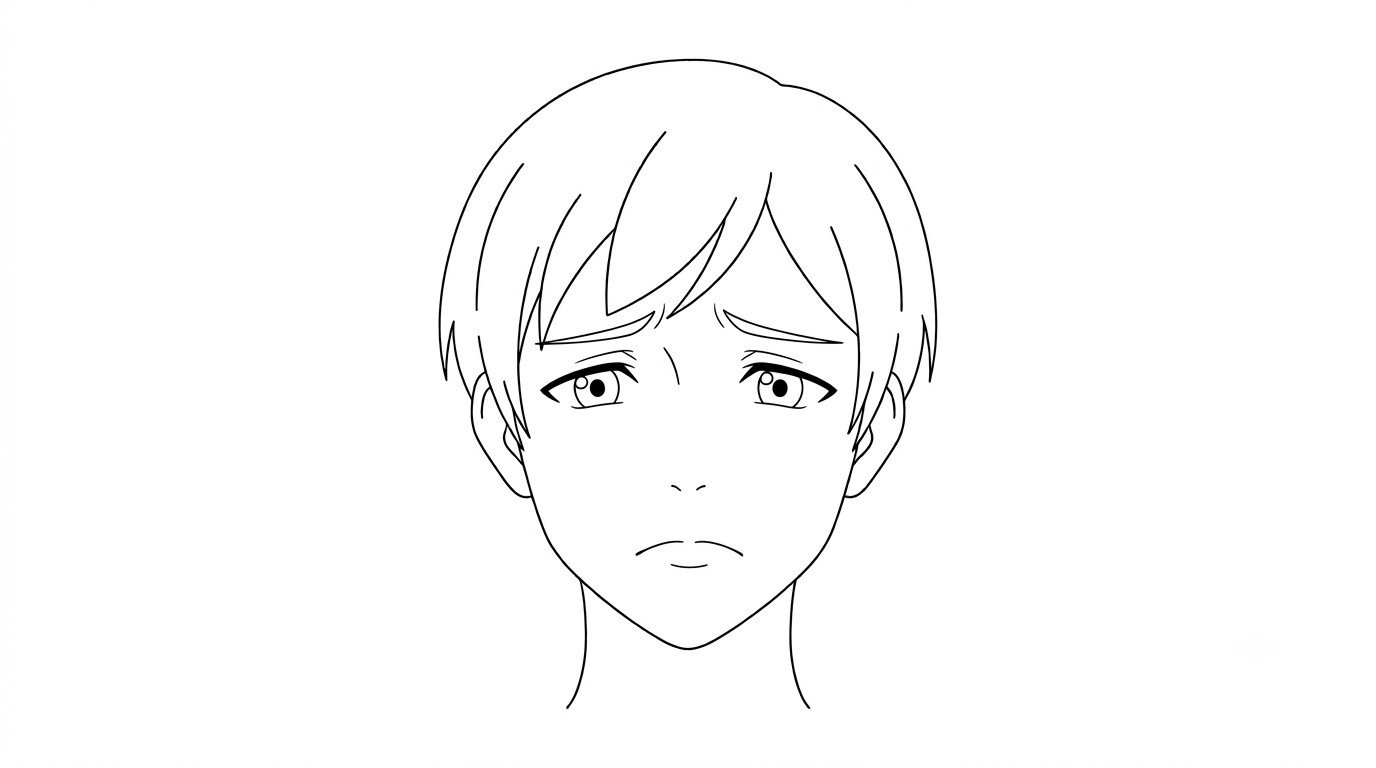
Expression 4: Sad
- Eyebrows: inner ends raised (giving the “worried” look)
- Eyes: slightly drooped at outer corners
- Mouth: downturned curve
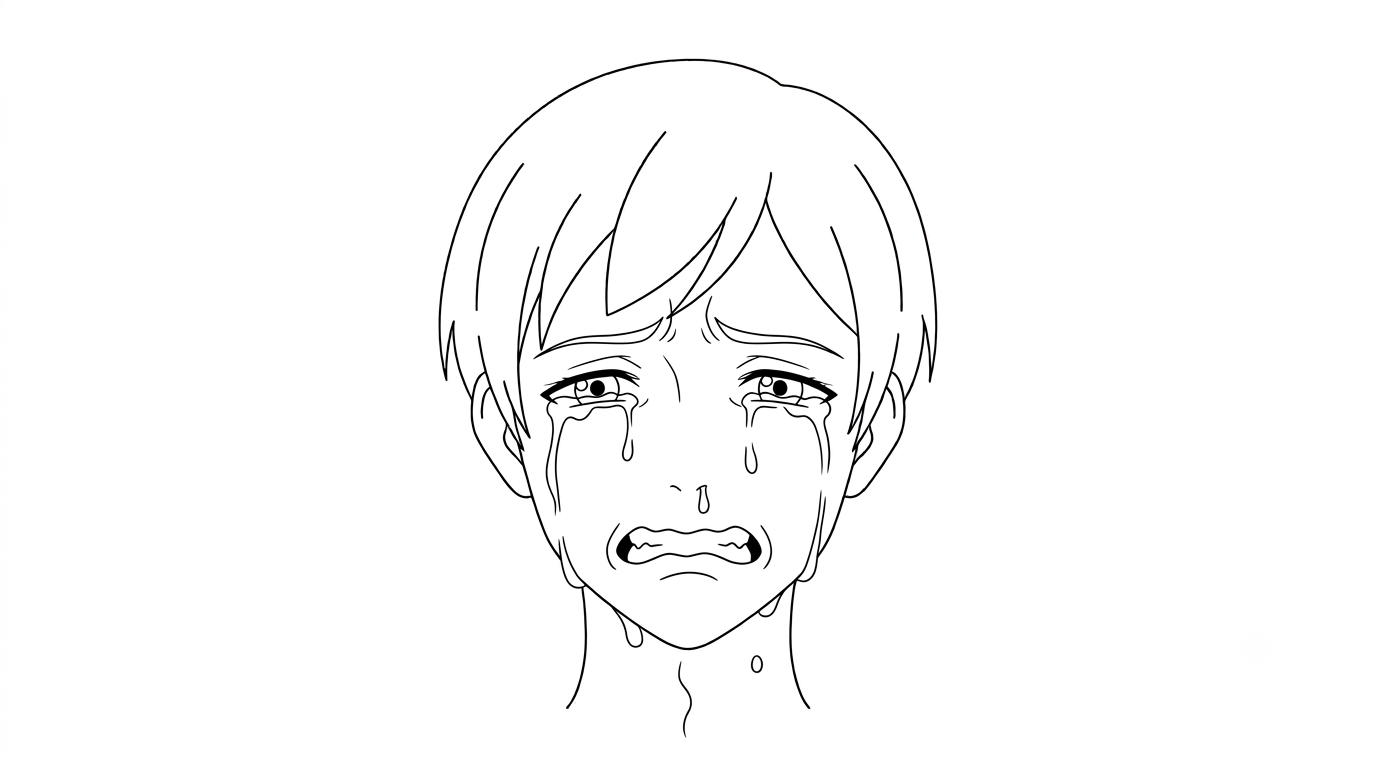
Expression 5: Crying
- Eyes: overflowing with large teardrop shapes (same as sad but more extreme)
- Eyebrows: heavily furrowed inward-upward
- Mouth: may open in a sob shape
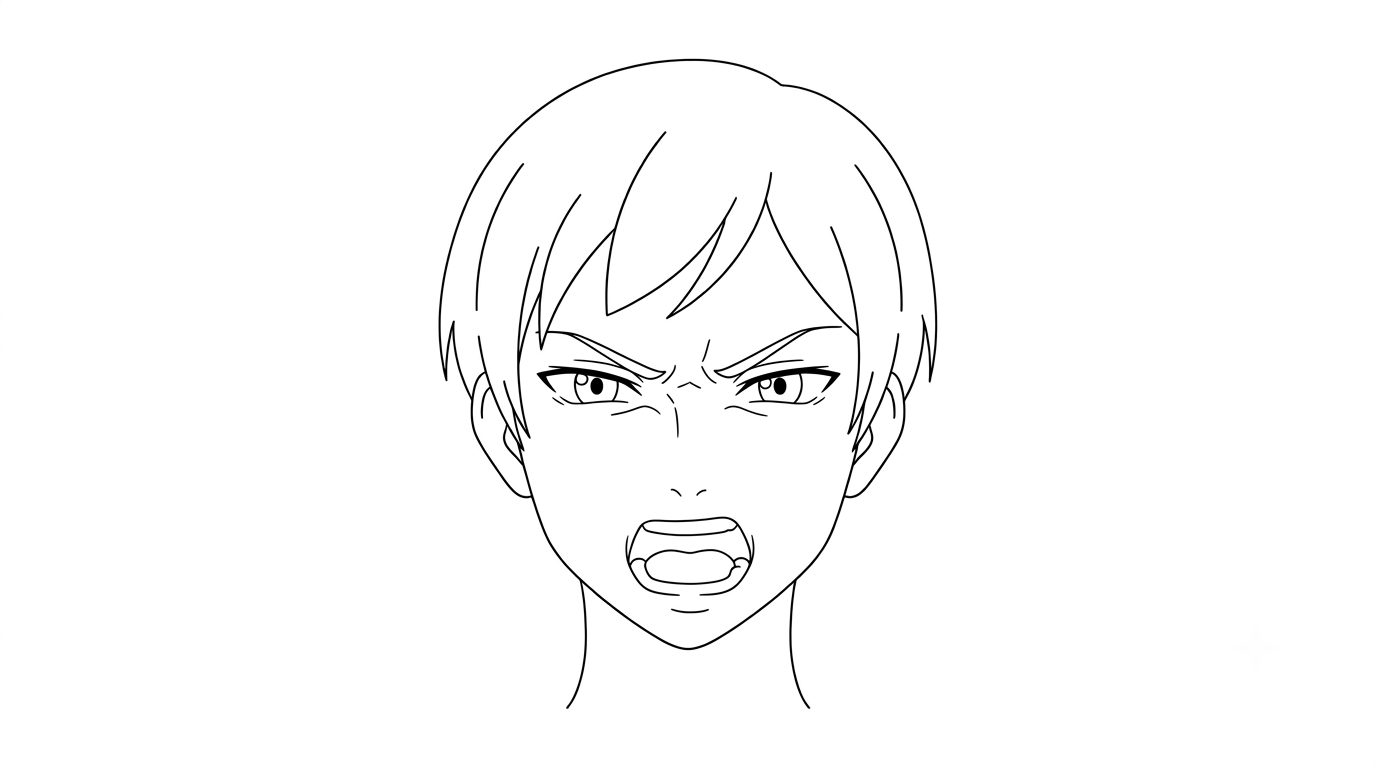
Expression 6: Angry
- Eyebrows: strongly angled downward toward center (inner ends lower)
- Eyes: narrowed, squinting
- Mouth: clenched or wide-open yell
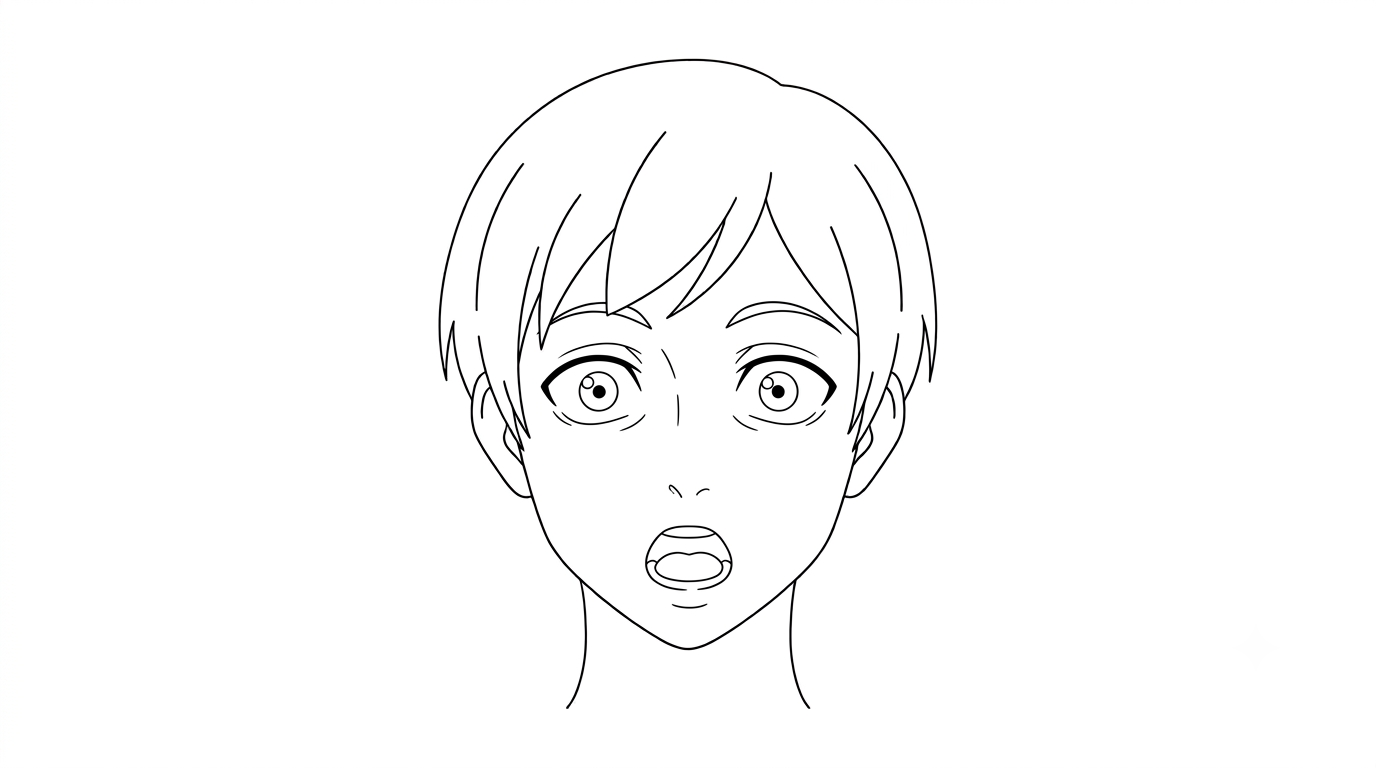
Expression 7: Surprised
- Eyebrows: raised high, arched
- Eyes: very wide, large irises visible
- Mouth: open circle or oval
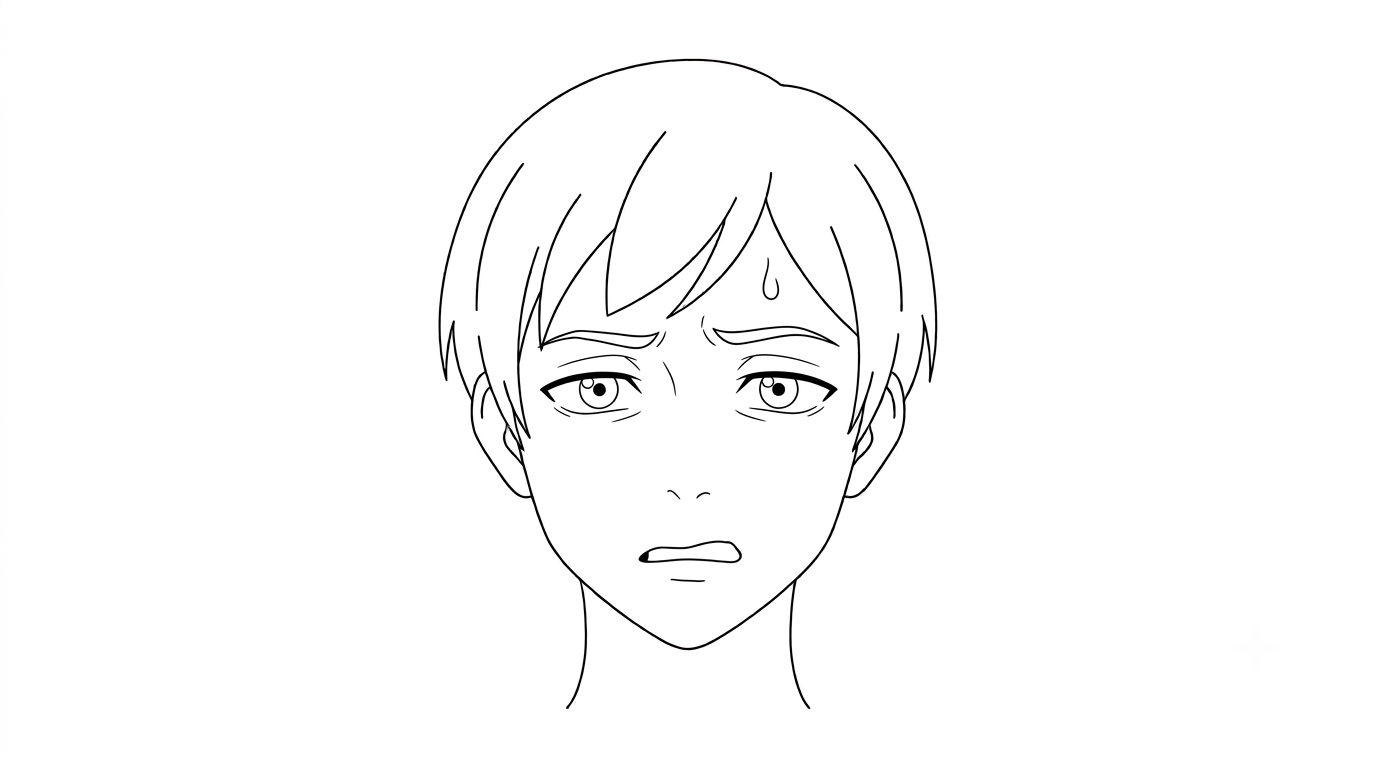
Expression 8: Confused
- Eyebrows: one raised, one flat (asymmetric)
- Eyes: slightly narrowed, possibly a sweat drop
- Mouth: wavy or slightly open
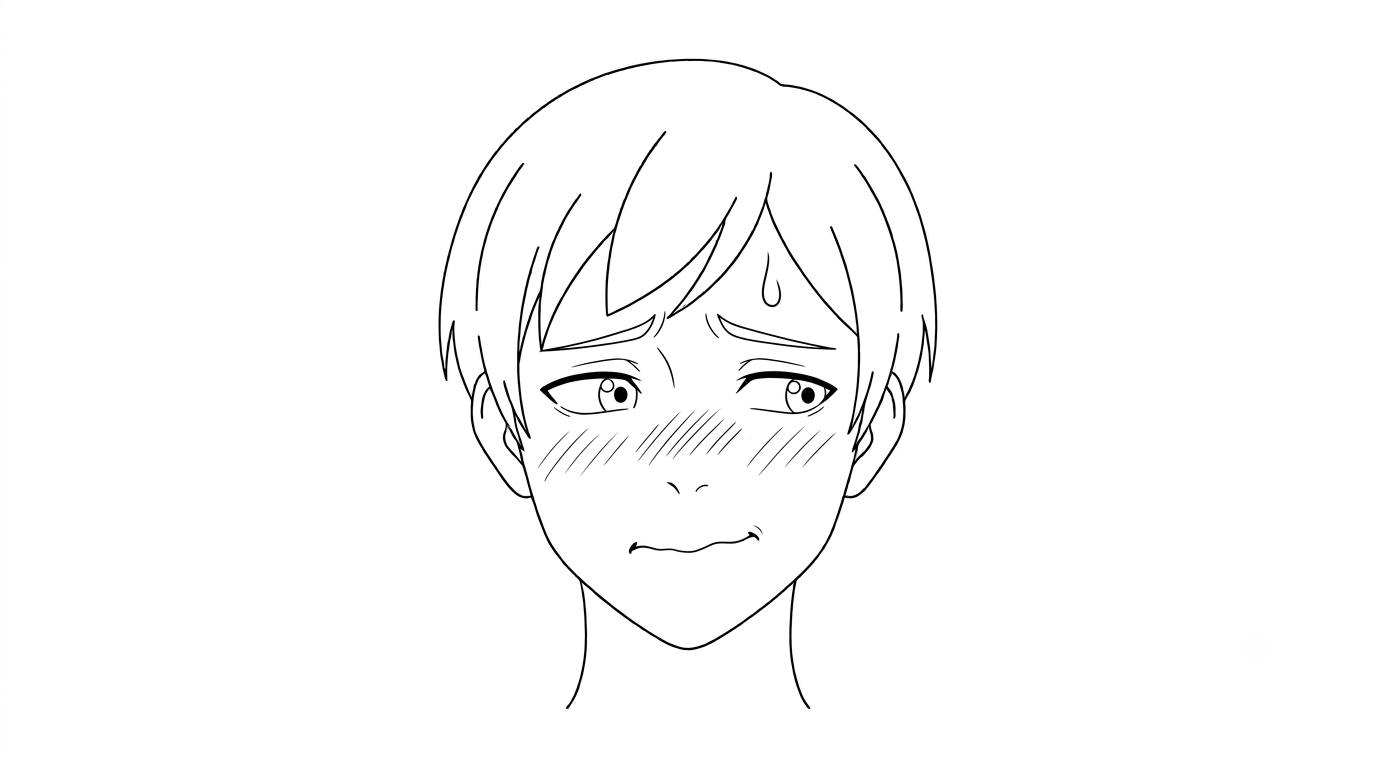
Expression 9: Embarrassed
- Eyebrows: angled upward in center (similar to sad)
- Eyes: looking away or downward
- Mouth: closed or slight grimace
- Add: blush marks on cheeks (two curved or diagonal lines)
Expression 10: Determined / Focused
- Eyebrows: lowered and angled inward (between angry and serious)
- Eyes: sharp, focused, often with a small glint or detail highlight
- Mouth: closed, often a small tight line or gritted teeth
- Add: a small sweat drop or shadow line near the temple for intensity
Expression 11: Sleepy / Tired
- Eyebrows: drooping, slightly lowered
- Eyes: half-closed, heavy lids, smaller iris visible
- Mouth: slightly open or a small yawn shape
- Add: dark circles under the eyes, sometimes a small “Zzz” symbol nearby
Combining and Layering Expressions
Real expressions are rarely pure. A character can be mostly happy but with a hint of sadness in the eyes, or angry but with a slight worried furrow in the brows. To layer expressions, pick a dominant emotion and a secondary emotion, then adjust the secondary feature by about 30%.
For example: a character who is trying to stay calm (neutral mouth) but is actually scared (wide eyes, raised brows). Draw the neutral mouth first, then raise the brows slightly and widen the eyes. The conflict between the two signals reads as nervousness or suppressed fear.
Another common combination: angry eyes with a sad mouth. This reads as frustration, disappointment, or holding back tears. The key is that the two features contradict each other — that tension is what makes the expression interesting.
Microexpressions for Close-Ups
In close-up panels and character portraits, add small microexpression cues that suggest the character’s inner state:
- Slight sweat drop — nervousness, embarrassment, or awkwardness
- Small shadow line near the temple — stress, anger, or determination
- Eyes slightly off-center — lying, hiding something, or discomfort
- Mouth twitching — suppressed laughter, irritation, or uncertainty
- Blush marks — embarrassment, attraction, or physical exertion
These cues are drawn very lightly — a few strokes at most — and they appear only in close-ups where the face is large enough for the viewer to notice them. In small panels, stick to the three-control system alone.
The Eyebrow Cheat Sheet
Inner ends UP → sadness, worry, crying Inner ends DOWN → anger, focus, determination Both raised HIGH → surprise, shock, fear Asymmetric → confusion, skepticism
Common Mistakes
- Forgetting the eyebrows — eyebrows carry 50% of the expression
- Eyes too normal — push the exaggeration
- Mouth contradicting eyebrows — they must match the same emotion
Practice Advice
Draw a face grid: 3 rows × 3 columns. Fill each cell with one expression. Your first version will look similar — keep redrawing until they’re clearly different.