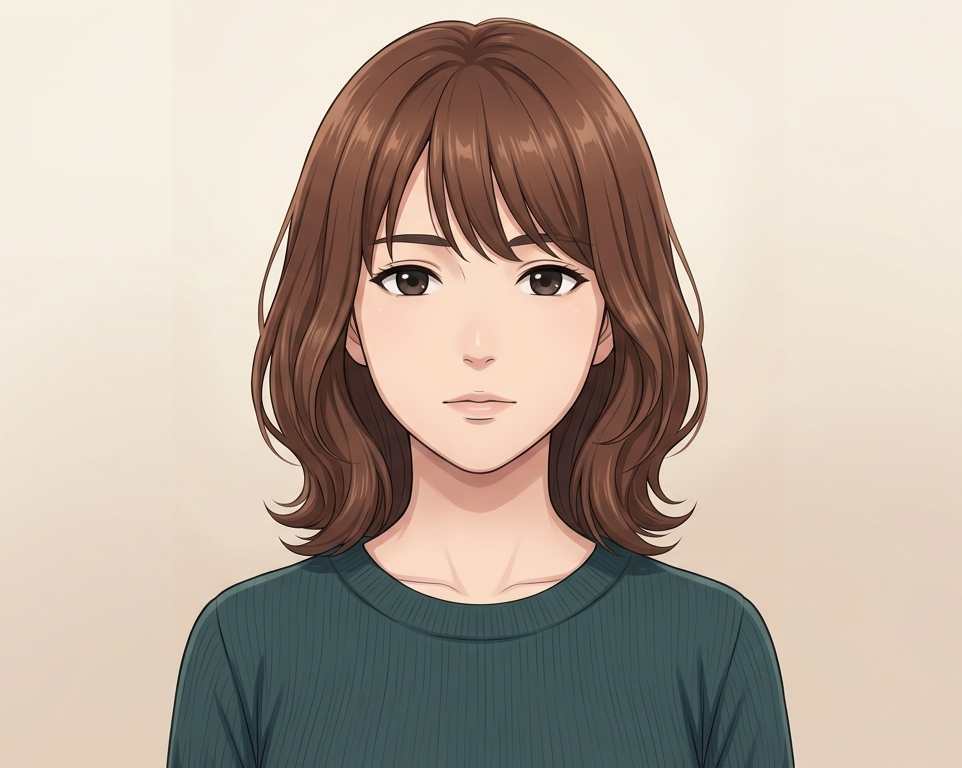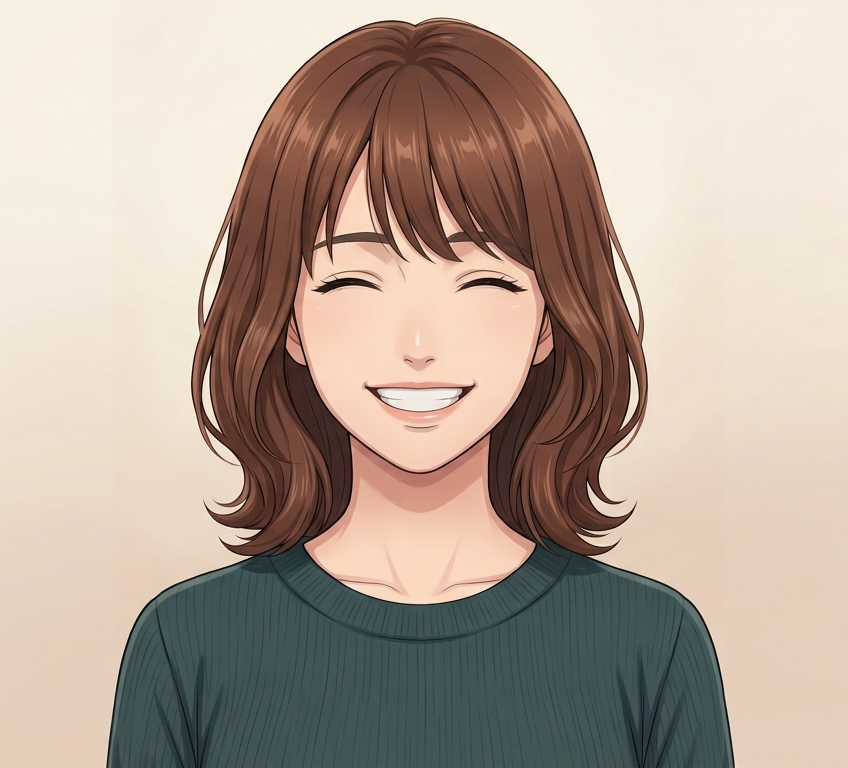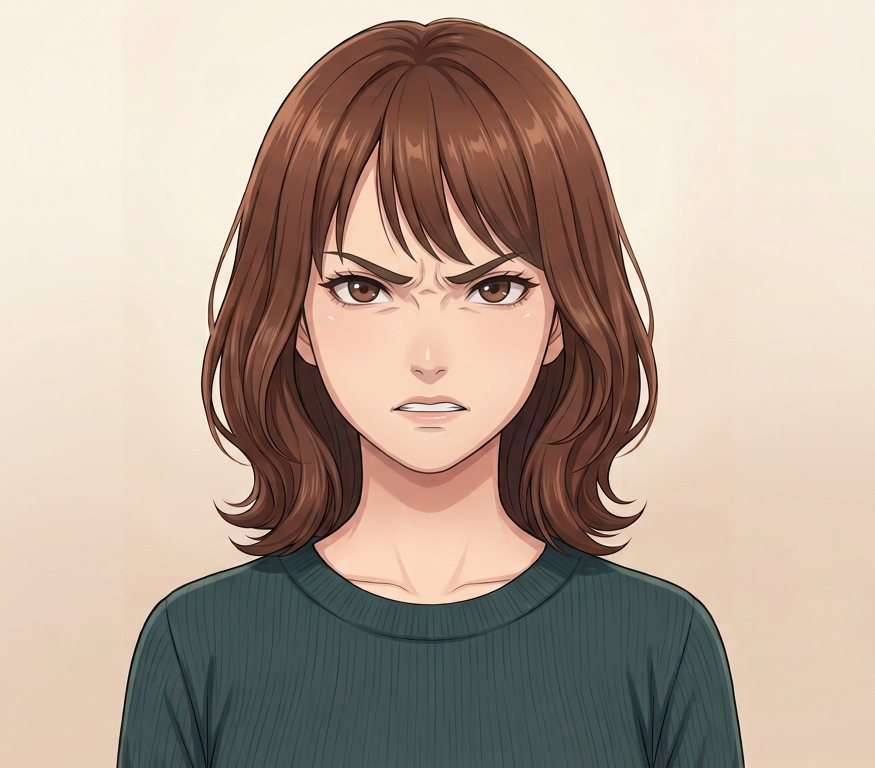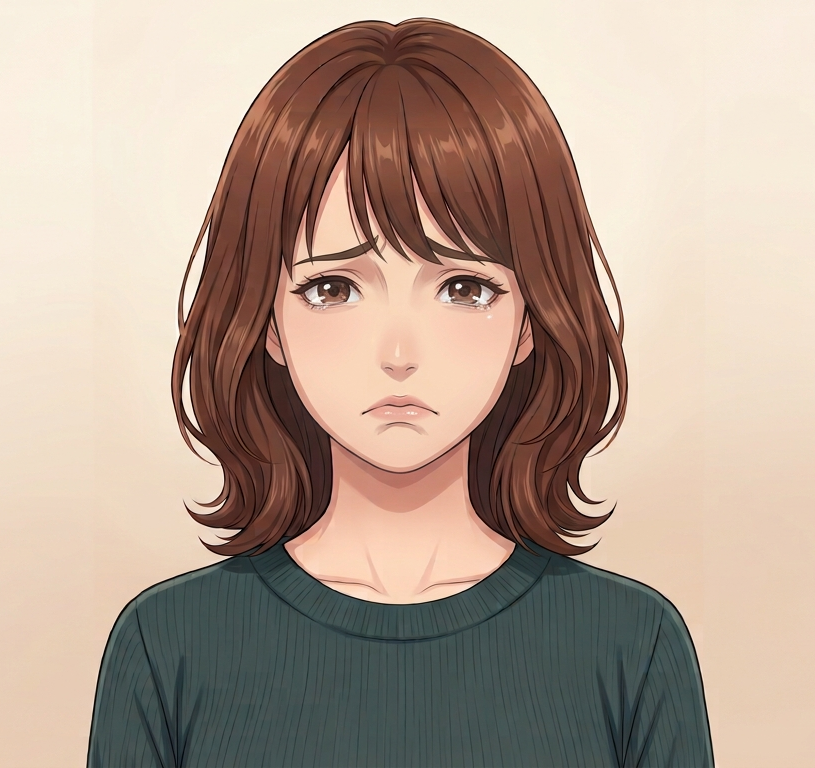
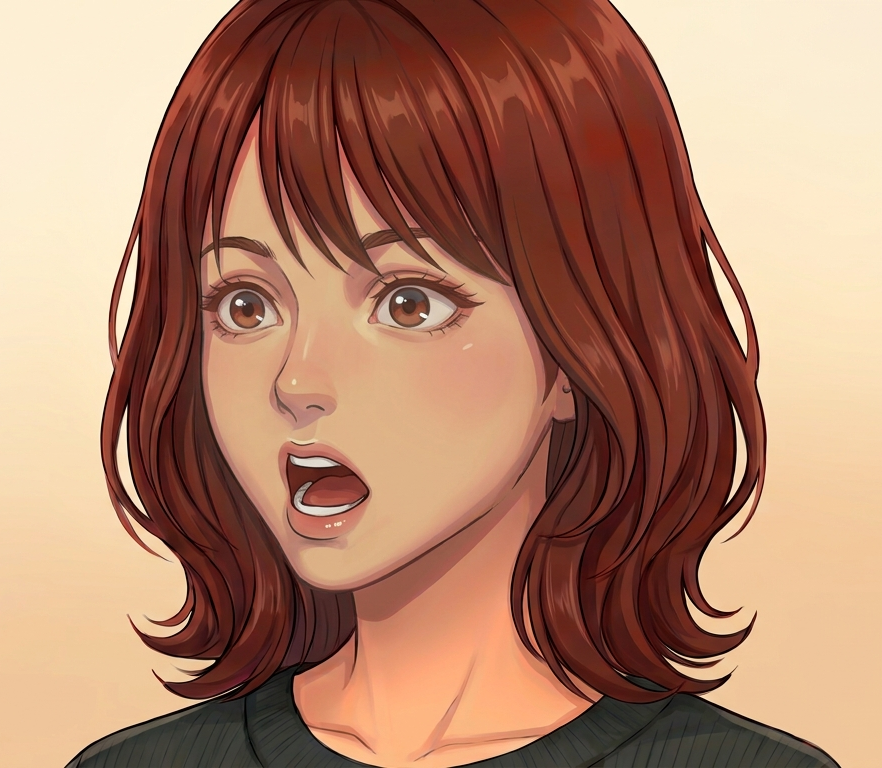
Female · 3/4 · Surprised
Three-quarter view of a female anime face looking surprised.
Practice Advice
Study the alignment of features and angle of construction lines. Use our interactive practice tools to draw timed sketches of this pose.
How to Draw a Female Anime Face (Three-Quarter View, Surprised Expression)
This reference shows a female anime face in three-quarter view with a surprised expression. Use it as a drawing study: first work through the construction, then apply the expression, then refine with the practice plan below.
About This Reference
Three-quarter view of a female anime face looking surprised.
1. Construct the Three-Quarter View
At a three-quarter turn the head is still anchored by one circle, but the symmetry is broken. Shift the vertical centerline toward the far edge of the face: features on the near side stay wide, while features on the far side compress toward the profile. The far eye narrows and tucks behind the nose bridge, while the near eye keeps almost its full width. The jaw sweeps from the cheek down to a chin point that sits closer to the center of the page.
- The far eye appears noticeably narrower than the near eye.
- The bridge of the nose overlaps the far eye socket.
- The far edge of the jaw tucks behind the profile line.
- The mouth shifts toward the near side of the centerline.
2. Anatomy Notes for a Female Face
Female anime faces read through softness and larger features. The jaw tapers to a gentler, rounded chin, the cheeks are softer, and the eyes are larger and sit slightly lower on the face for a youthful look. The nose is small and subtle, the lips are fuller, and the upper lashes are drawn with a thicker, cleaner line.
3. Breaking Down the Surprised Expression
Surprise snaps everything open. The brows shoot high, the eyes round out with the iris shrinking to reveal more white, and the mouth drops into a small O or a wide open oval. Forehead creases appear. The wider the eye white and the rounder the mouth, the stronger the surprise reads.
- Brows: high and arched.
- Eyes: wide open with a small iris and lots of white.
- Mouth: a dropped O or open oval.
- Details: forehead crease lines.
4. What to Watch for in This Reference
In a 3/4 reference, the most important thing to study is how the far-side features compress. Notice how much narrower the far eye is compared to the near eye, and how the nose bridge overlaps the far eye socket. These two overlaps are what make the 3/4 turn readable — without them the face reads as flat.
Surprise is the expression most dependent on the amount of white showing in the eyes. Study how much iris is visible in your reference — a mild surprise shows more iris, while a shock shows mostly white with a tiny iris. The mouth shape also scales with intensity: a small O for mild surprise, a wide oval for shock.
5. Common Mistakes at This Angle
The most common error at 3/4 is keeping the centerline perfectly vertical or drawing both eyes at full width. The far eye should compress to about two-thirds of the near eye, and the centerline should curve toward the far side.
Drawing surprise with wide eyes but a neutral mouth. The mouth must open to sell the surprise. A wide-eyed face with a closed mouth reads as fear or alertness, not surprise.
Quick practice plan
- Draw the head construction only (no features) 3 times at this angle, focusing on the guidelines.
- Add the surprised expression on top, copying the feature positions from this reference.
- Check your work against the common mistakes list above and fix any issues.
- Repeat with the reference flipped or mirrored to break dependency on the original.
- Time yourself with a 5-minute timer and sketch the pose from memory.