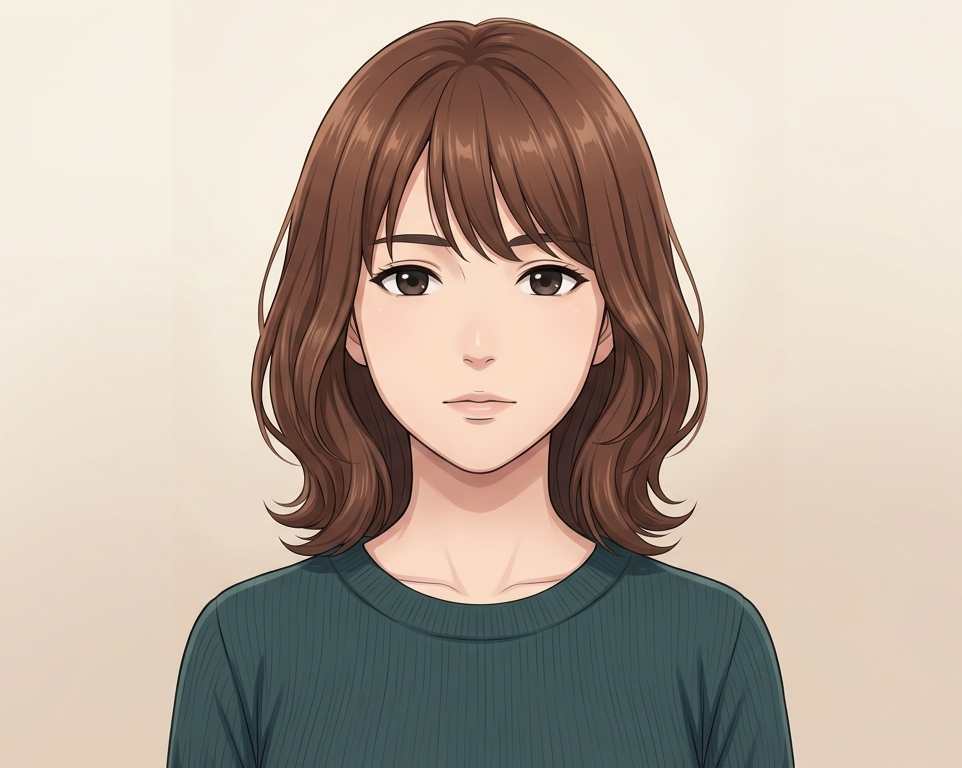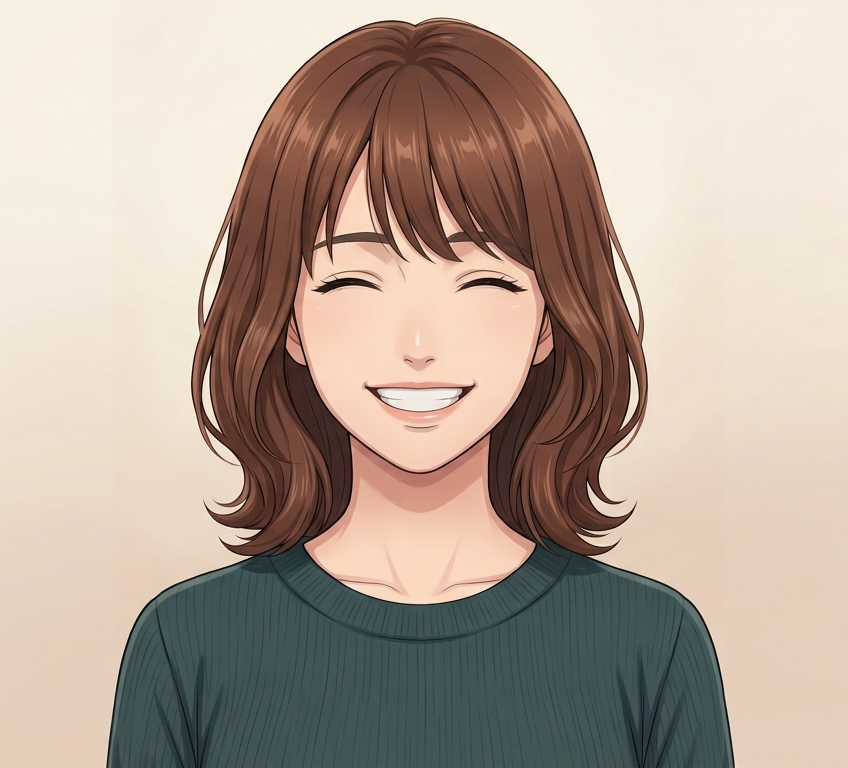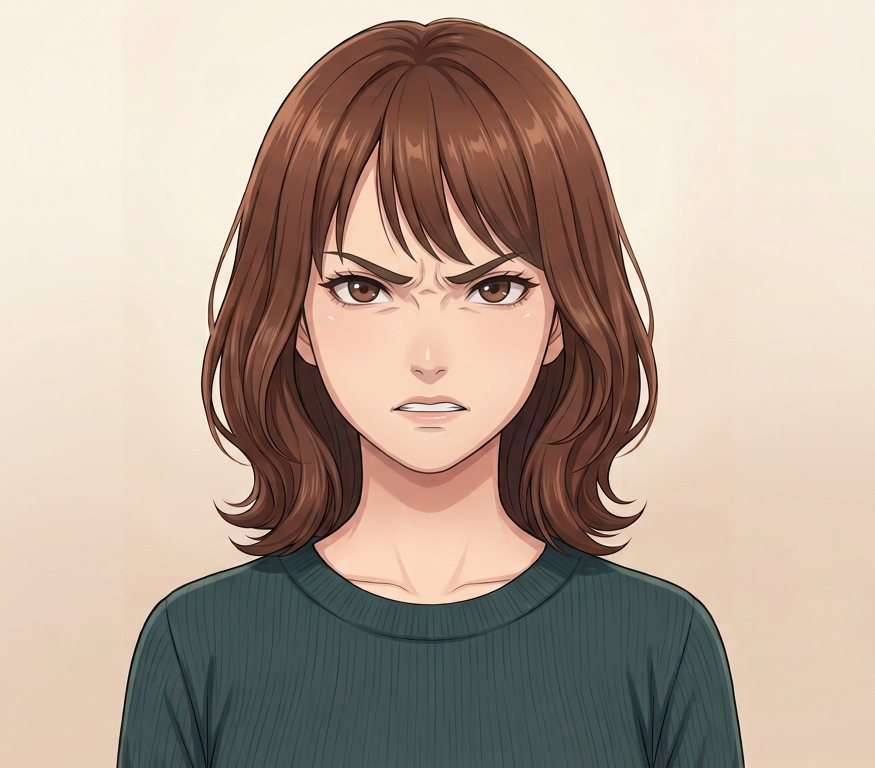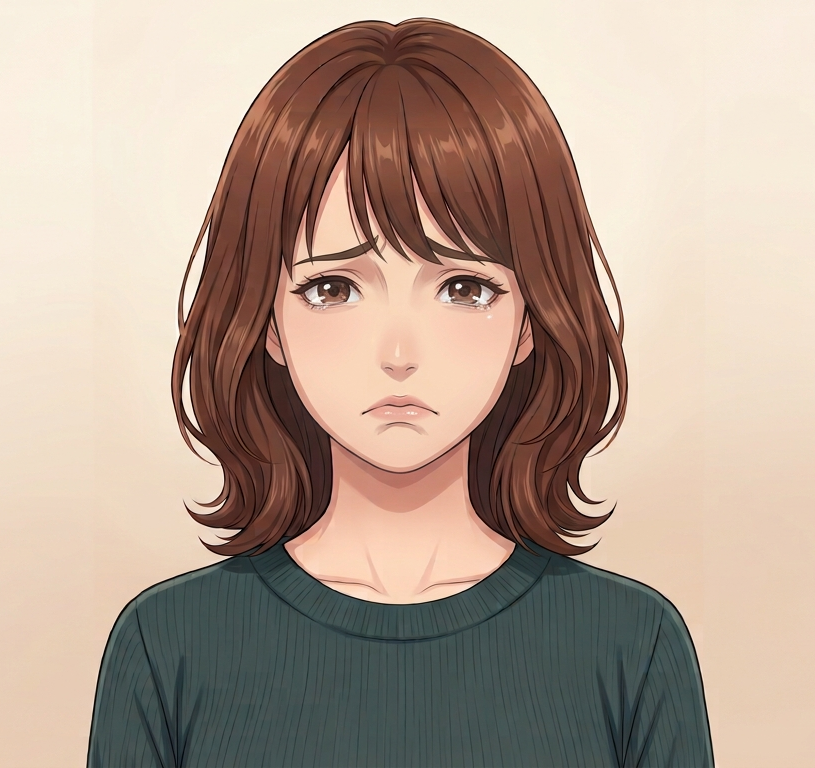
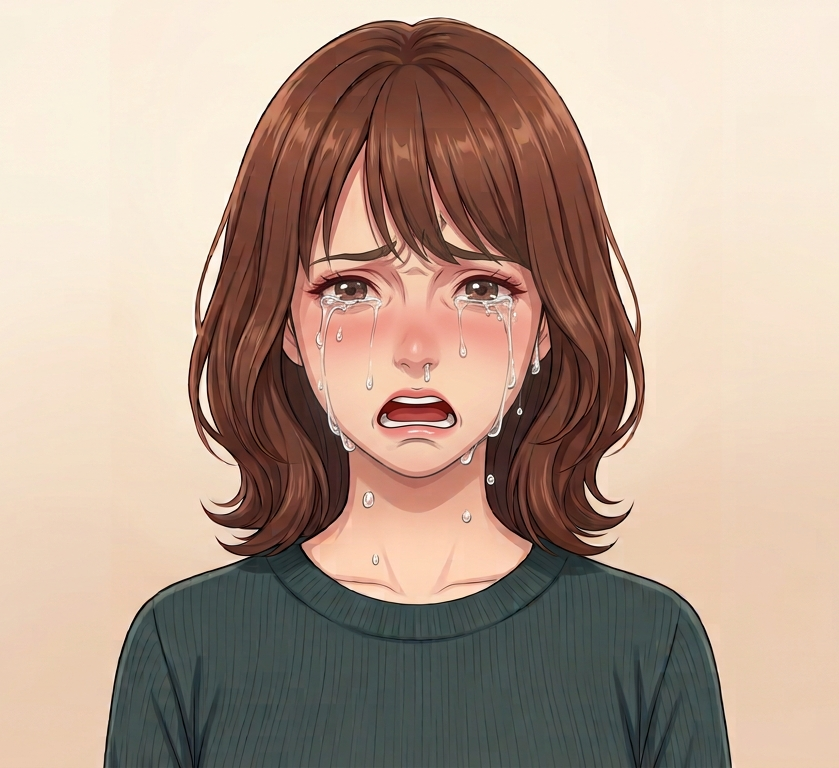
Female · Front · Crying
Frontal view of a female anime face crying with streaming tears.
Practice Advice
Study the alignment of features and angle of construction lines. Use our interactive practice tools to draw timed sketches of this pose.
How to Draw a Female Anime Face (Front View, Crying Expression)
This reference shows a female anime face in front view with a crying expression. Use it as a drawing study: first work through the construction, then apply the expression, then refine with the practice plan below.
About This Reference
Frontal view of a female anime face crying with streaming tears.
1. Construct the Front View
A straight-on anime face is built from a circle and a few crossing guidelines. Start with a clean circle for the cranium and drop a vertical centerline down the middle for symmetry. Add a horizontal eye-line across the exact vertical center of the circle; this is where both eyes sit. Halfway between the eye-line and the bottom of the circle, mark the nose line, and halfway between that and the chin, mark the mouth line. Dividing the lower half into thirds keeps every feature balanced.
- The distance between the two eyes should equal roughly one eye-width.
- The nose tip sits halfway between the eye-line and the chin base.
- The mouth line rests halfway between the nose line and the chin.
- Keep the jaw tapers symmetrical on both sides of the centerline.
2. Anatomy Notes for a Female Face
Female anime faces read through softness and larger features. The jaw tapers to a gentler, rounded chin, the cheeks are softer, and the eyes are larger and sit slightly lower on the face for a youthful look. The nose is small and subtle, the lips are fuller, and the upper lashes are drawn with a thicker, cleaner line.
3. Breaking Down the Crying Expression
Crying pushes sadness into overflow. The brows scrunch inward and upward, the eyes squeeze closed or well up with tears, and the mouth opens into a wobbly downward shape. Add glossy tear tracks from the inner corners of the eyes, a reddened nose tip, and occasional tear blobs. The key is contrast: scrunched brows against a very open, wet mouth.
- Brows: deeply scrunched inward and upward.
- Eyes: squeezed shut or full of pooled tears.
- Mouth: wide and wobbly with the corners down.
- Tears: glossy tracks running from the inner corners.
4. What to Watch for in This Reference
When studying a front-view reference, pay most attention to the symmetry of the eyes and the width of the mouth. Even slight asymmetry in the eye placement or the jawline will make the face read as off. Use a ruler or the side of your pencil to check that both eyes sit at exactly the same height on the eye-line.
Crying references show the face at its most compressed. Study how the brows scrunch together at the inner corners, creating horizontal crease lines across the forehead. The tears are not just lines — they are glossy, rounded shapes that catch light. The nose reddens because of increased blood flow, which is a detail many artists miss.
5. Common Mistakes at This Angle
Beginners often draw the eyes at different heights or make the mouth too wide. The mouth should span less than the distance between the eyes in most anime styles.
Drawing tears as simple diagonal lines. Tears in anime are glossy teardrop shapes with a small highlight on the upper curve. They also tend to pool at the inner corner of the eye before falling.
Quick practice plan
- Draw the head construction only (no features) 3 times at this angle, focusing on the guidelines.
- Add the crying expression on top, copying the feature positions from this reference.
- Check your work against the common mistakes list above and fix any issues.
- Repeat with the reference flipped or mirrored to break dependency on the original.
- Time yourself with a 5-minute timer and sketch the pose from memory.