Tip: use Mirror to spot asymmetry, Grid to check construction, Trace slider to fade for tracing practice.
Reference Specs
- Type
- Hair Reference
- ID
- hair-ref-104
- Gender
- Female
- Angle
- Front Left 3/4
- Hairstyle
- Layered Shoulder
- Texture
- layered straight
- Edge
- feathered
- Volume
- medium-full
- Fringe
- layered framing
- Chunks
- 6 major chunks
- Difficulty
- ★★★☆☆ (3/5)
- Est. time
- 16 min sketch
- Silhouette
- shoulder-length fall broken into stacked layers of varying length
- stacked layers of different lengths
- feathered ends
- face-framing front pieces
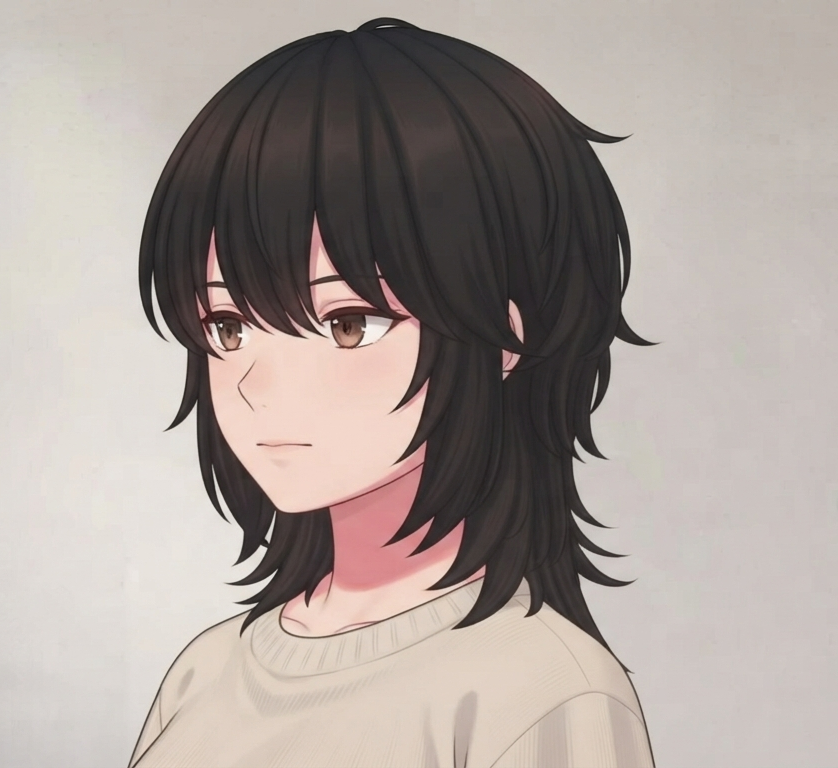
Female · Layered Shoulder · Front Left 3/4
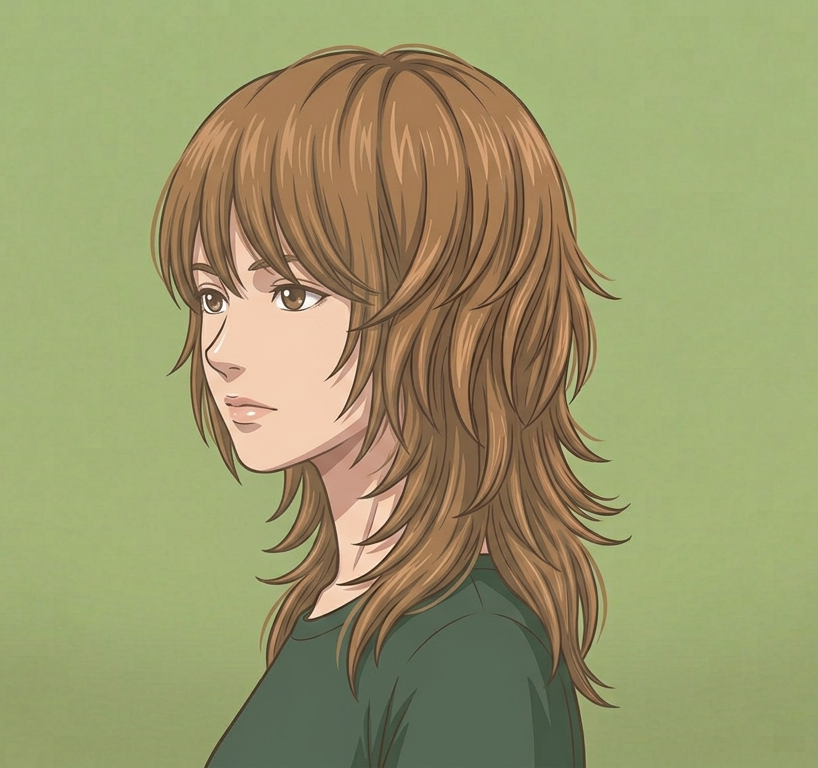
Female anime Layered Shoulder hair reference from a front left 3/4 view — shoulder-length fall broken into stacked layers of varying length. Key traits: stacked layers of different lengths and feathered ends. Includes silhouette, focus on the 6-chunk structure; count the chunks on the image before drawing and match that count in your sketch. with a timed practice plan.
Practice this reference
This layered-shoulder at front left 3/4 takes about 16 minutes. Block the silhouette before any interior detail — use Mirror in the viewer to check symmetry.
How to Draw Layered Shoulder Hair — Front Left 3/4 View (★★★☆☆)
This front left 3/4 view shows Layered Shoulder on a female character — shoulder-length fall broken into stacked layers of varying length rendered with layered straight texture and feathered ends. Difficulty ★★★☆☆ · ~16 min. Study the 6-chunk structure before adding any interior lines. Focus on the 6-chunk structure; count the chunks on the image before drawing and match that count in your sketch.
About This Reference
Female anime Layered Shoulder hair reference from a front left 3/4 view — shoulder-length fall broken into stacked layers of varying length. Key traits: stacked layers of different lengths and feathered ends. Includes silhouette, focus on the 6-chunk structure; count the chunks on the image before drawing and match that count in your sketch. with a timed practice plan.
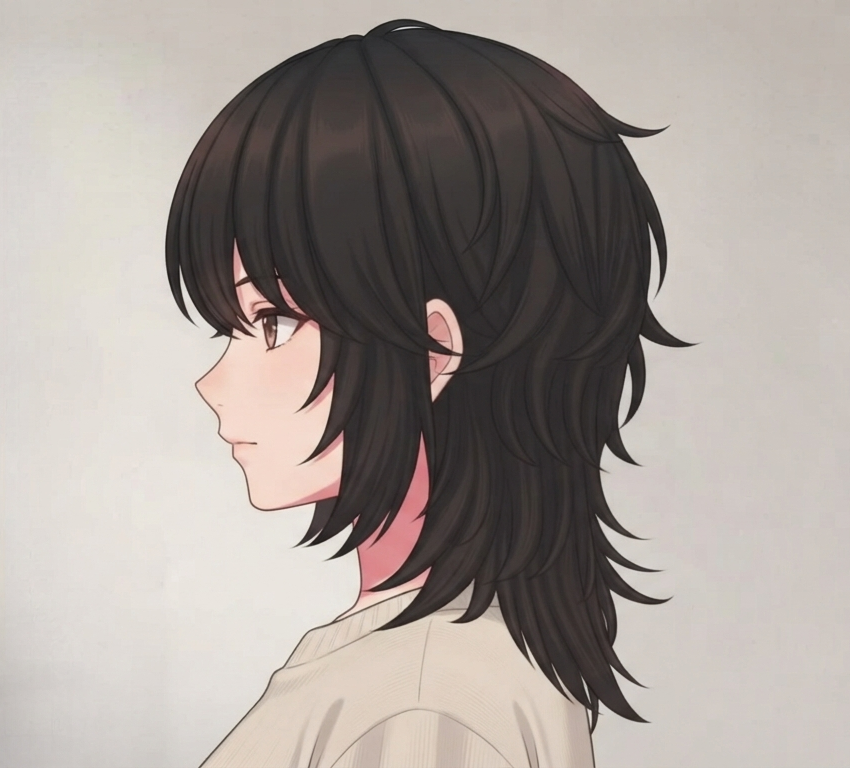
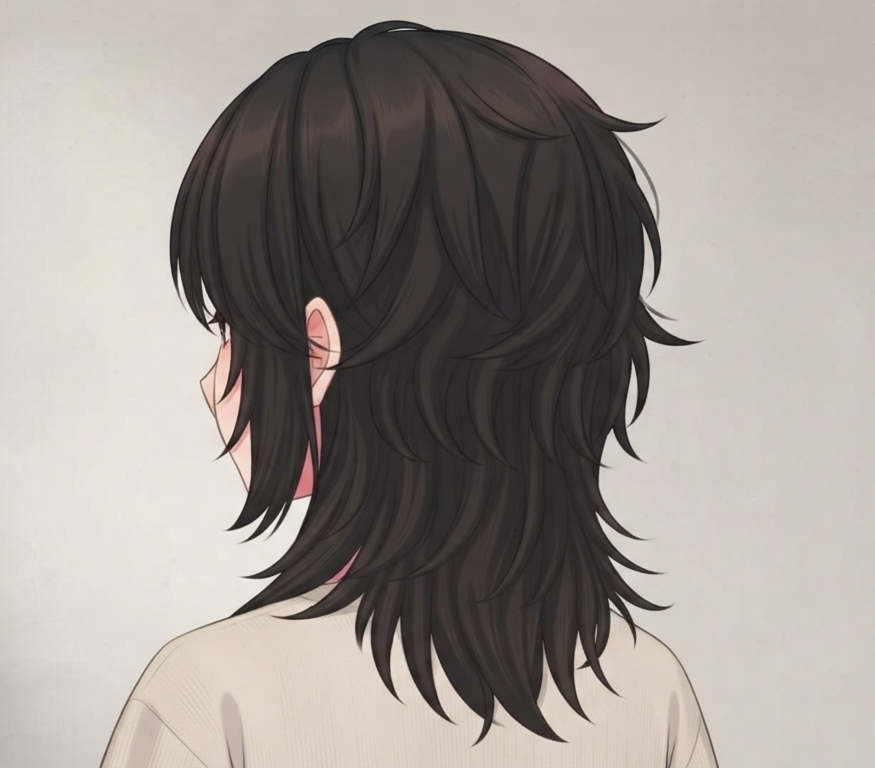
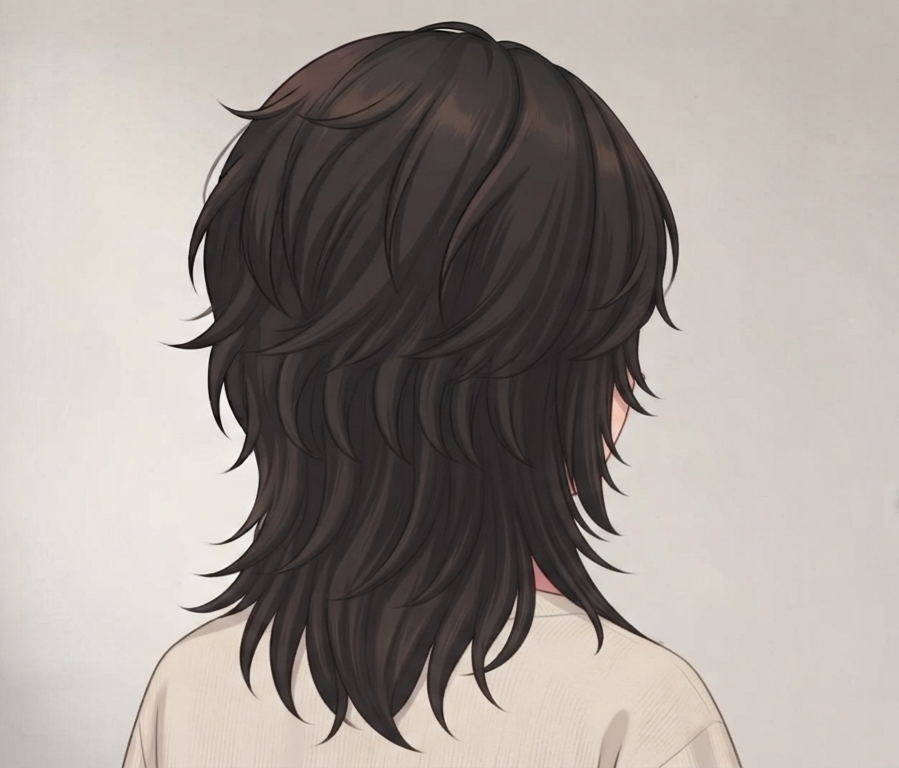
Hair design reference showing a female anime character with a layered shoulder hairstyle from a front left 3/4 angle.
1. Structure of Layered Shoulder — medium-full · layered straight
Layered shoulder-length hair alternates short and long strands to create depth around the shoulders. Break the fall into three or four layers of different lengths, each following the skull curve, then vary the strand thickness to sell the layered cut.
For this exact piece the key specs are: 6 major chunks, feathered edges, layered framing, and gentle movement. The silhouette reads as shoulder-length fall broken into stacked layers of varying length.
Distinctive traits to nail: stacked layers of different lengths; feathered ends; face-framing front pieces. If your sketch captures those three, the style will read even at thumbnail size.
- Layers: three or four stacked lengths of fall.
- Shape: each layer follows the curve of the head.
- Strands: vary thickness to sell the layered cut.
2. Drawing It at the Front Left 3/4 Angle
At a front-left three-quarter angle the hair rotates with the head: the left-side mass foreshortens and the far-right falls compress toward the profile. Keep the part line in perspective and let the fringe wrap around the forehead curve.
Block the shoulder-length fall broken into stacked layers of varying length first, then carve 6 major chunks following the crown flow before refining the feathered ends. At the front-left-3-4 angle, balance the left and right falls around the vertical centerline and keep the fringe aligned with the eye-line.
Angle-specific focus for this reference: how the left-side layered straight mass foreshortens toward the viewer while the far-right fall compresses toward the profile line; the part wrapping around the forehead curve.
- The left-side mass foreshortens toward the viewer.
- The far-right falls compress toward the profile edge.
- The fringe wraps around the forehead curve.
3. Gender Styling Notes — Female
Female anime faces read through softness and larger features. The jaw tapers to a gentler, rounded chin, the cheeks are softer, and the eyes are larger and sit slightly lower on the face for a youthful look. The nose is small and subtle, the lips are fuller, and the upper lashes are drawn with a thicker, cleaner line.
With this layered-shoulder the medium weight and medium-full volume interact with the female head shape: keep the hairline softer and lower and let the layered framing do the framing work.
4. What to Watch in This Exact Reference (hair-ref-104)
Study these three focal points in order for Layered Shoulder at front left 3/4:
1. How the left-side layered straight mass foreshortens toward the viewer while the far-right fall compresses toward the profile line; the part wrapping around the forehead curve.
2. The feathered edge quality and how 6 major chunks follow the skull curve.
3. Where the layered framing sits relative to the eye-line and whether strands break the forehead line.
Layered hair reads through the contrast between long and short strands. Study how the top layer is shortest and the bottom layer is longest, creating a stepped silhouette. Each layer should follow the curve of the head, not fall straight down.
5. Common Mistakes for Layered Shoulder at Front Left 3/4
Drawing the far-side hair at the same width as the near side — with 6 major chunks, the far side should compress toward the profile edge.
Drawing both sides of the hair at the same width. At 3/4 the far-side volume should be thinner than the near side.
Style-specific check: Making all layers the same length. Layered hair is defined by the contrast between lengths. If all strands end at the same point, it reads as a blunt cut, not layers.
Quick practice plan — 16 minutes
- Block the silhouette (shoulder-length fall broken into stacked layers of varying length) first — no interior lines, just the outer shape. Check that the medium-full volume sits correctly relative to the head circle.
- Carve 6 major chunks following the crown flow; label each chunk number lightly before refining.
- Refine the feathered edges and place the layered framing so it frames the eye-line without covering it.
- Compare against the 3 focal points above; fix the largest error first, then re-check.
- Set a 16-minute timer and redraw the same Layered Shoulder from the front to transfer the learning.