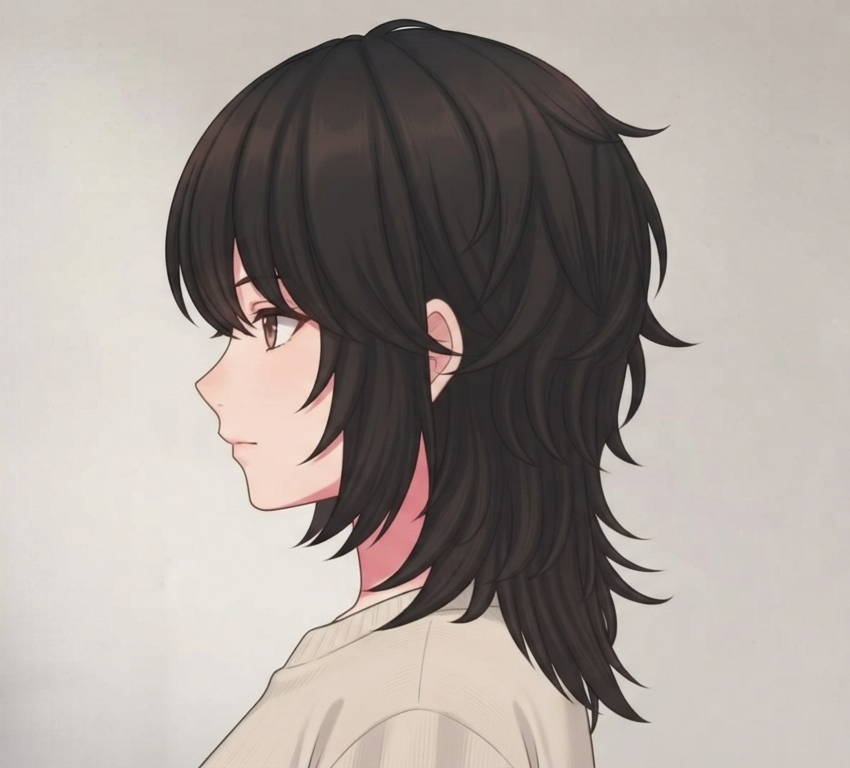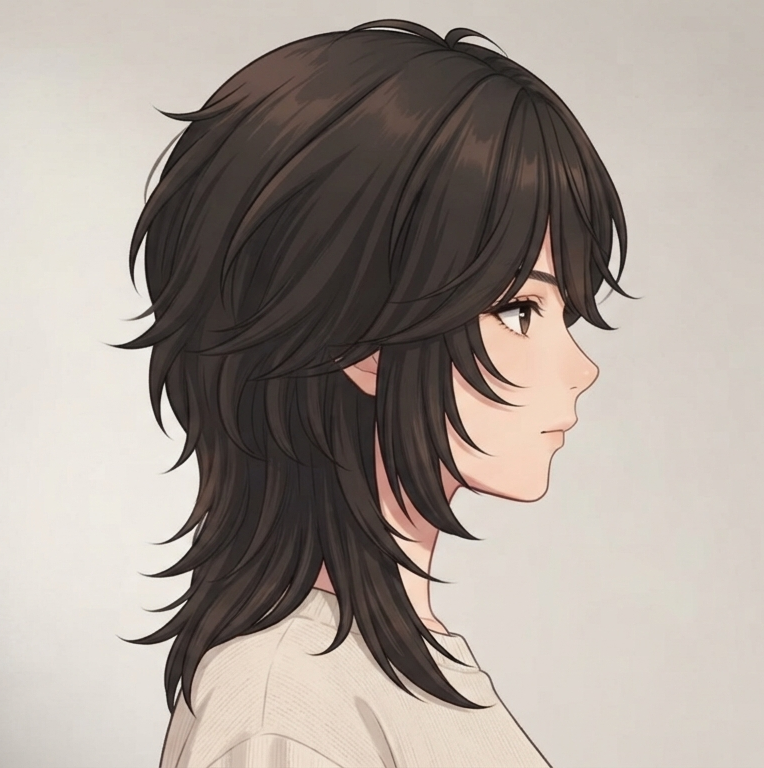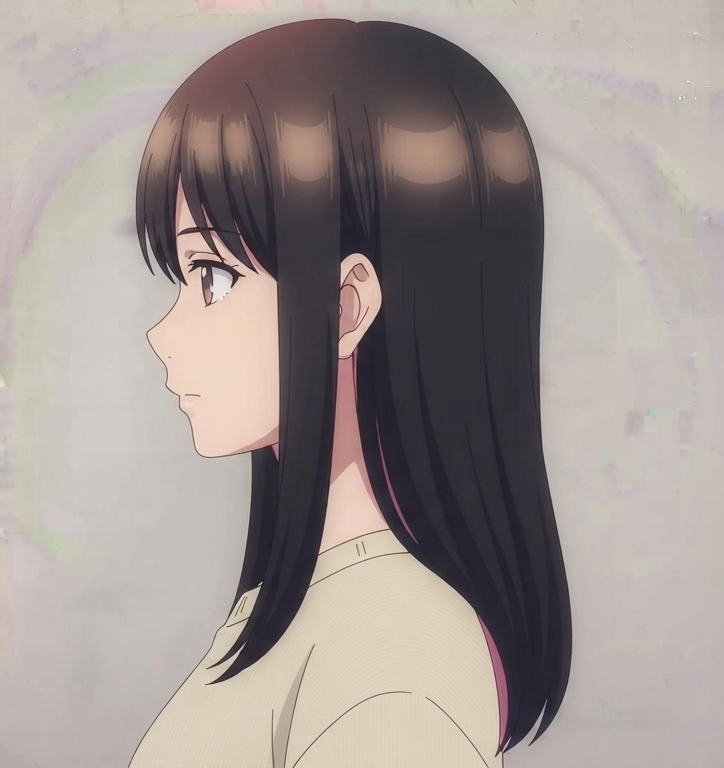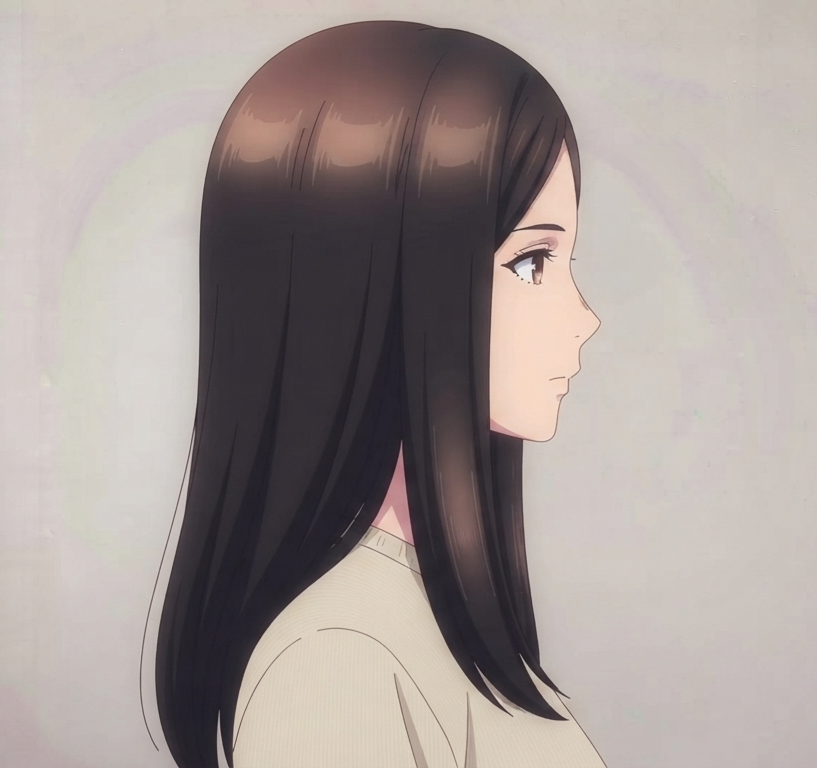
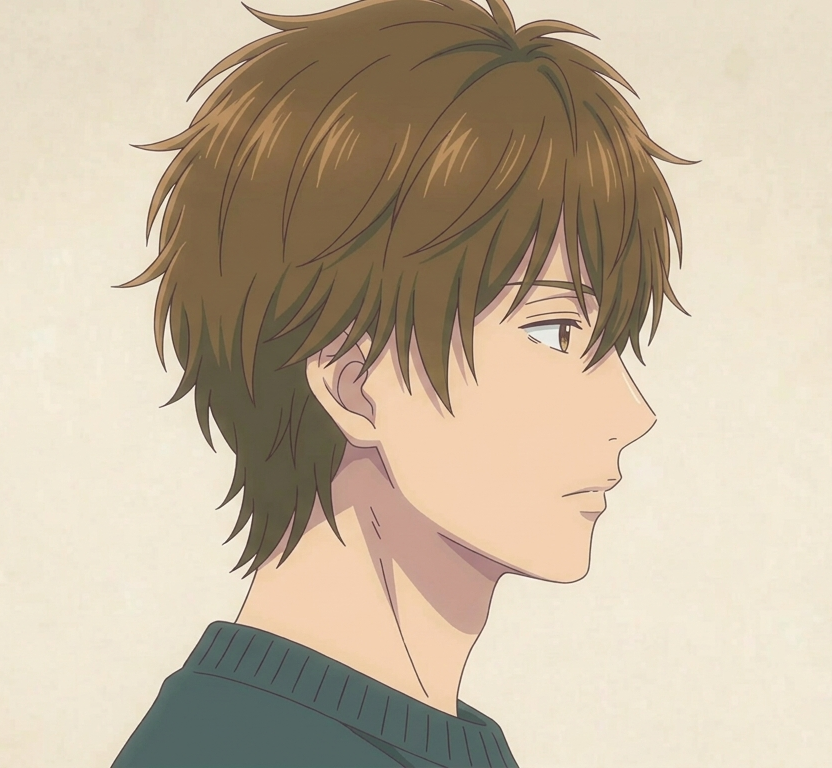
Male · Medium Layered · Right Side
Hair design reference showing a male anime character with a medium layered hairstyle from a right side angle.
Practice Advice
Study the alignment of features and angle of construction lines. Use our interactive practice tools to draw timed sketches of this pose.
How to Draw Medium Layered Hair (Right Side)
This reference shows Medium Layered hair on a male character from a right side view. Use it as a structure study for silhouette, chunking, and flow.
About This Reference
Hair design reference showing a male anime character with a medium layered hairstyle from a right side angle.
1. Structure of Medium Layered Hair
Medium layered hair falls past the ears and stops around the jaw. Layer the fall into two or three stacked sections, keep the ends slightly feathered, and let the front layers frame the cheekbones or tuck behind the ears.
- Length: falls past the ears, ends around the jaw.
- Layers: two or three stacked, slightly feathered sections.
- Front: frame the cheekbones or tuck behind the ears.
2. Drawing It at the Right Side Angle
From the right profile the hair reads as one continuous silhouette from the crown down the back and over the forehead. Compress the fringe against the face and show the hair's thickness at the nape of the neck.
- The hair reads as one continuous silhouette from crown to back.
- Compress the fringe against the face profile.
- Show thickness where the hair meets the nape of the neck.
3. Gender Styling Notes
Male anime faces read through structure. The jaw is broader and more angular, the chin stronger, and the brow ridge more defined. The eyes are narrower and sit slightly higher on the head construction, the nose is sharper with a defined bridge, and the neck is thicker. Use firmer, straighter lines for the jaw and neck to sell the masculine silhouette.
4. What to Watch for in This Reference
Medium layered hair is defined by the feathered ends and the stacking of layers. Study how the shortest layer frames the face and the longest layer falls to the jaw. The feathered ends should look soft and textured, not blunt.
Profile hair is a single continuous silhouette. Study how the hair flows from the crown down the back, over the forehead, and down the nape. The thickness at the nape is what gives the hair mass its weight.
5. Common Mistakes with This Style
Making the layers too distinct or too blended. Medium layers should feel natural — the transitions between layers should be soft, not like steps.
Breaking the silhouette with too many interior lines. In profile, the outer contour of the hair is the strongest line in the drawing — keep interior lines light.
Quick practice plan
- Block in the hair silhouette first, ignoring interior strands entirely.
- Add the chunk structure, following the flow lines from the crown.
- Refine edges and add 3-4 accent strands where the mass meets the face.
- Check your work against the common mistakes list above and fix any issues.
- Redraw the same hairstyle from a different angle using this reference as the base.