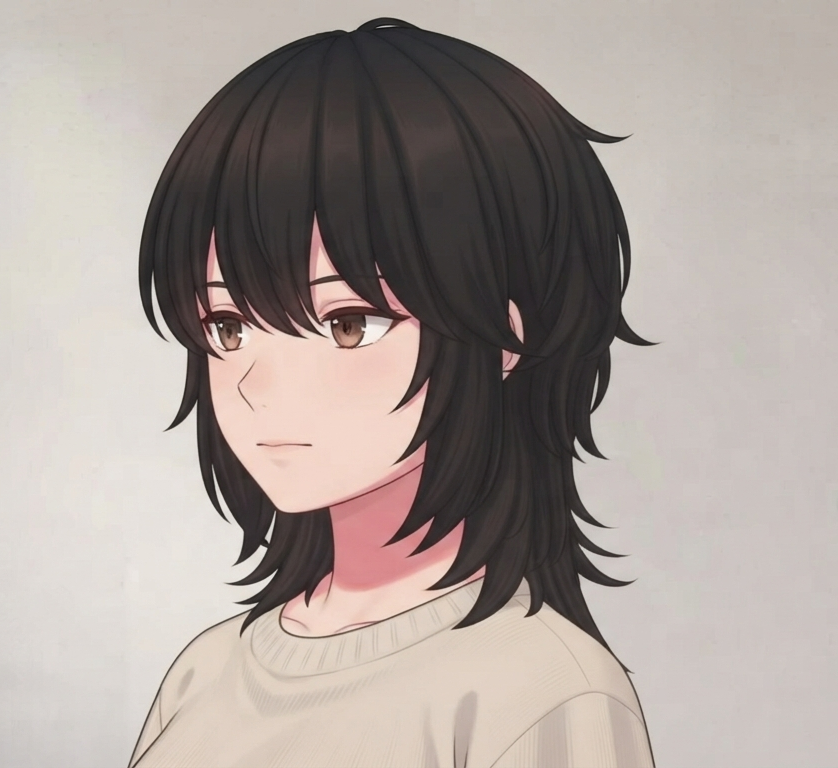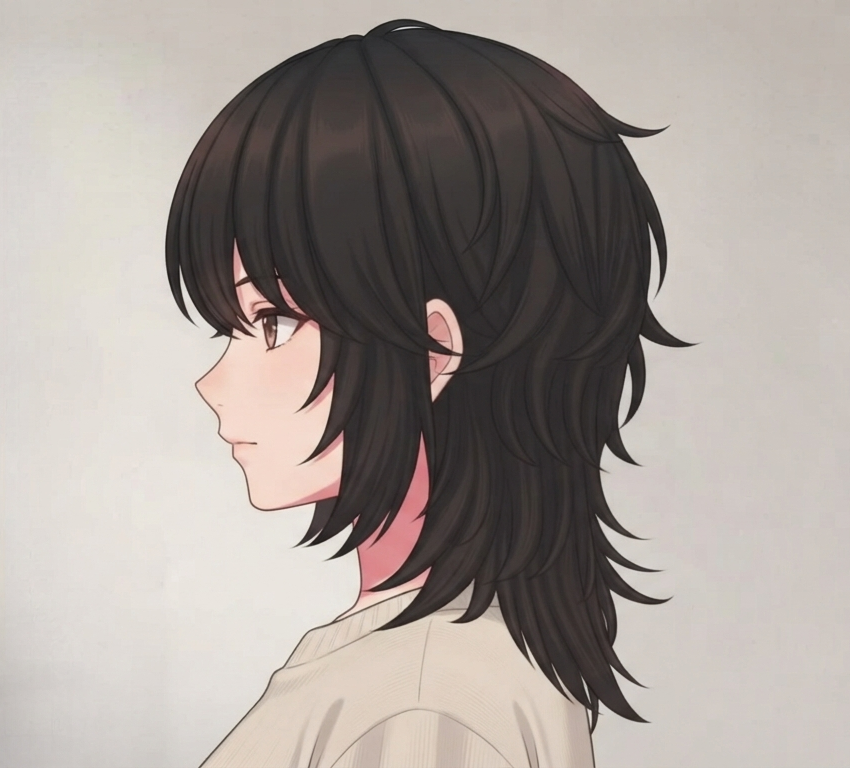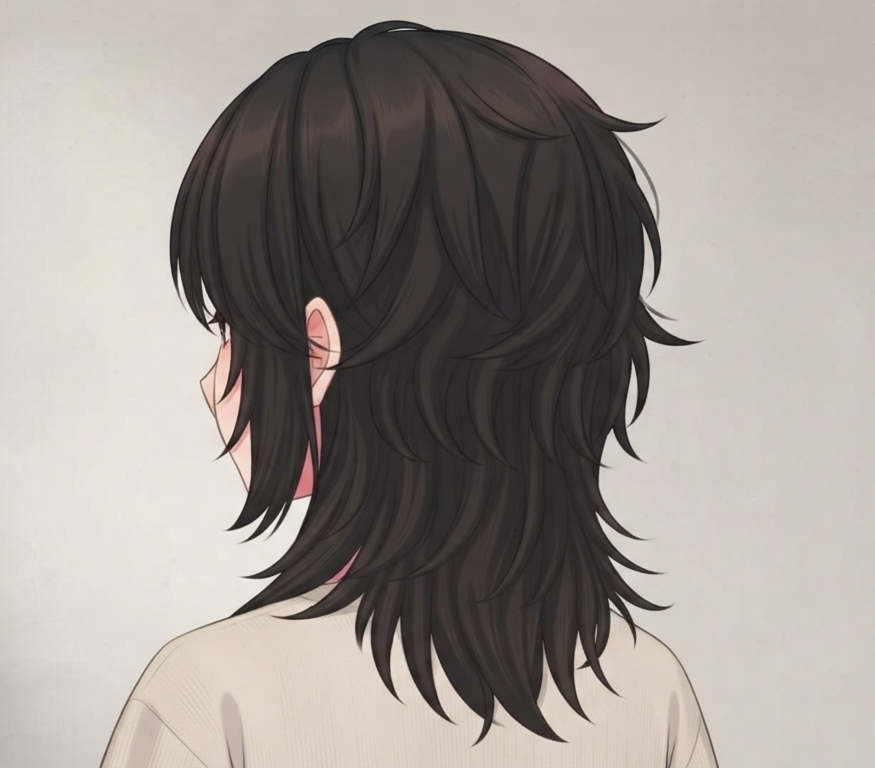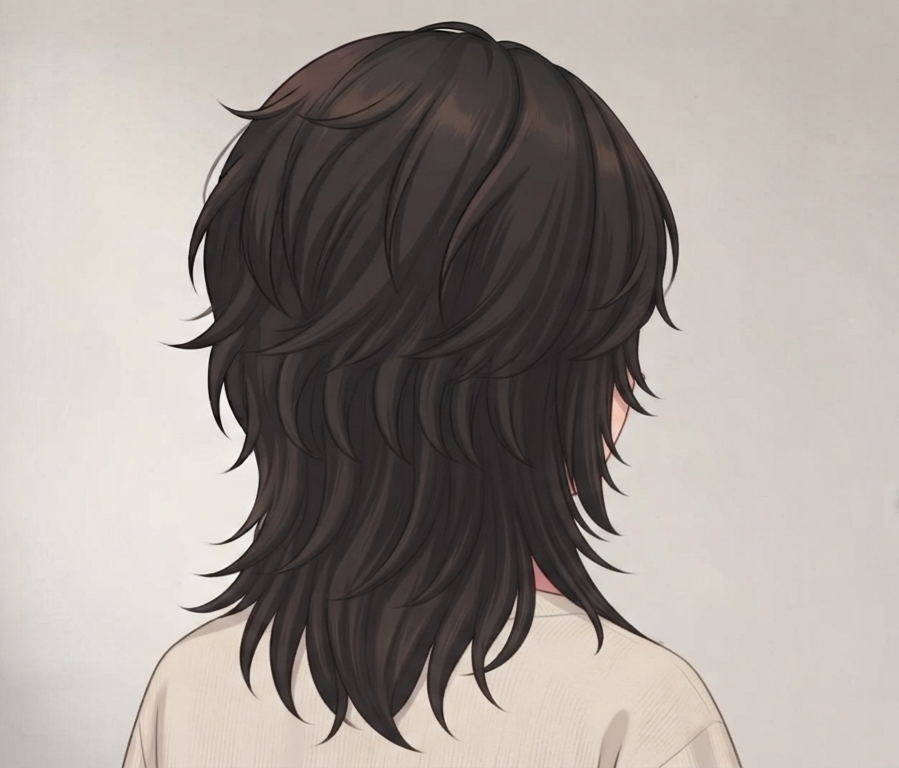
Tip: use Mirror to spot asymmetry, Grid to check construction, Trace slider to fade for tracing practice.
Reference Specs
- Type
- Hair Reference
- ID
- hair-ref-029
- Gender
- Female
- Angle
- Back
- Hairstyle
- High Ponytail
- Texture
- smooth pulled-back
- Edge
- defined tie point
- Volume
- gathered
- Fringe
- pulled-back (forehead exposed)
- Chunks
- 5 major chunks
- Difficulty
- ★★★☆☆ (3/5)
- Est. time
- 14 min sketch
- Silhouette
- hair pulled to a high tie point with a single flowing tail above the crown
- high tie point on the crown
- exposed forehead and hairline
- single tapered tail
Female · High Ponytail · Back
Female anime High Ponytail hair reference from a back view — hair pulled to a high tie point with a single flowing tail above the crown. Key traits: high tie point on the crown and exposed forehead and hairline. Includes silhouette, best for practicing smooth pulled-back flow with defined tie point ends. pair with a pulled-back (forehead exposed) study. with a timed practice plan.
Practice this reference
This high-ponytail at back takes about 14 minutes. Block the silhouette before any interior detail — use Mirror in the viewer to check symmetry.
How to Draw High Ponytail Hair — Back View (★★★☆☆)
This back view shows High Ponytail on a female character — hair pulled to a high tie point with a single flowing tail above the crown rendered with smooth pulled-back texture and defined tie point ends. Difficulty ★★★☆☆ · ~14 min. Study the 5-chunk structure before adding any interior lines. Best for practicing smooth pulled-back flow with defined tie point ends. Pair with a pulled-back (forehead exposed) study.
About This Reference
Female anime High Ponytail hair reference from a back view — hair pulled to a high tie point with a single flowing tail above the crown. Key traits: high tie point on the crown and exposed forehead and hairline. Includes silhouette, best for practicing smooth pulled-back flow with defined tie point ends. pair with a pulled-back (forehead exposed) study. with a timed practice plan.
Hair design reference showing a female anime character with a high ponytail hairstyle from a back angle.
1. Structure of High Ponytail — gathered · smooth pulled-back
A high ponytail pulls the hair back from a visible forehead and gathers it into a single volume on top of the head. The key structures are the hairline and the tie point. The tail swings as one flowing mass with a few interior strands breaking it up.
For this exact piece the key specs are: 5 major chunks, defined tie point edges, pulled-back (forehead exposed), and dynamic movement. The silhouette reads as hair pulled to a high tie point with a single flowing tail above the crown.
Distinctive traits to nail: high tie point on the crown; exposed forehead and hairline; single tapered tail. If your sketch captures those three, the style will read even at thumbnail size.
- Hairline: fully visible, define it cleanly.
- Tie point: sits high on the crown.
- Tail: one flowing mass with 2-3 interior strands.
2. Drawing It at the Back Angle
From directly behind, the hair replaces the face entirely. The silhouette and the way the hair falls define the drawing: establish the outer shape, then map the internal strand direction with long flowing lines down the back.
Block the hair pulled to a high tie point with a single flowing tail above the crown first, then carve 5 major chunks following the crown flow before refining the defined tie point ends. At the back angle, the hair mass dominates; place the visible face slice last.
Angle-specific focus for this reference: the full smooth pulled-back silhouette replacing the face; the part structure and strand direction down the back with defined tie point ends.
- The silhouette alone carries the drawing.
- Map internal strand direction with long flowing lines.
- Show parting or braiding structure if present.
3. Gender Styling Notes — Female
Female anime faces read through softness and larger features. The jaw tapers to a gentler, rounded chin, the cheeks are softer, and the eyes are larger and sit slightly lower on the face for a youthful look. The nose is small and subtle, the lips are fuller, and the upper lashes are drawn with a thicker, cleaner line.
With this high-ponytail the medium weight and gathered volume interact with the female head shape: keep the hairline softer and lower and let the pulled-back (forehead exposed) do the framing work.
4. What to Watch in This Exact Reference (hair-ref-029)
Study these three focal points in order for High Ponytail at back:
1. The full smooth pulled-back silhouette replacing the face; the part structure and strand direction down the back with defined tie point ends.
2. The defined tie point edge quality and how 5 major chunks follow the profile contour.
3. Where the pulled-back (forehead exposed) sits relative to the eye-line and whether strands break the forehead line.
High ponytails have a distinct silhouette: the hair mass rises above the crown and the tail hangs down as one unit. Study how the tie point is slightly above the crown and how the tail swings with a slight curve rather than falling straight down.
5. Common Mistakes for High Ponytail at Back
Over-detailing the interior — from behind, the hair pulled to a high tie point with a single flowing tail above the crown and its strand direction are enough; keep interior lines sparse.
Adding too much interior detail to back-view hair. From behind, the silhouette and part line are enough — interior strands should be sparse.
Style-specific check: Drawing the ponytail tail as a thin stick. The tail should have volume — think of it as a long, tapering teardrop shape, not a line.
Quick practice plan — 14 minutes
- Block the silhouette (hair pulled to a high tie point with a single flowing tail above the crown) first — no interior lines, just the outer shape. Check that the gathered volume sits correctly relative to the head circle.
- Carve 5 major chunks following the crown flow; label each chunk number lightly before refining.
- Refine the defined tie point edges and place the pulled-back (forehead exposed) so it frames the eye-line without covering it.
- Compare against the 3 focal points above; fix the largest error first, then re-check.
- Set a 14-minute timer and redraw the same High Ponytail from the front to transfer the learning.